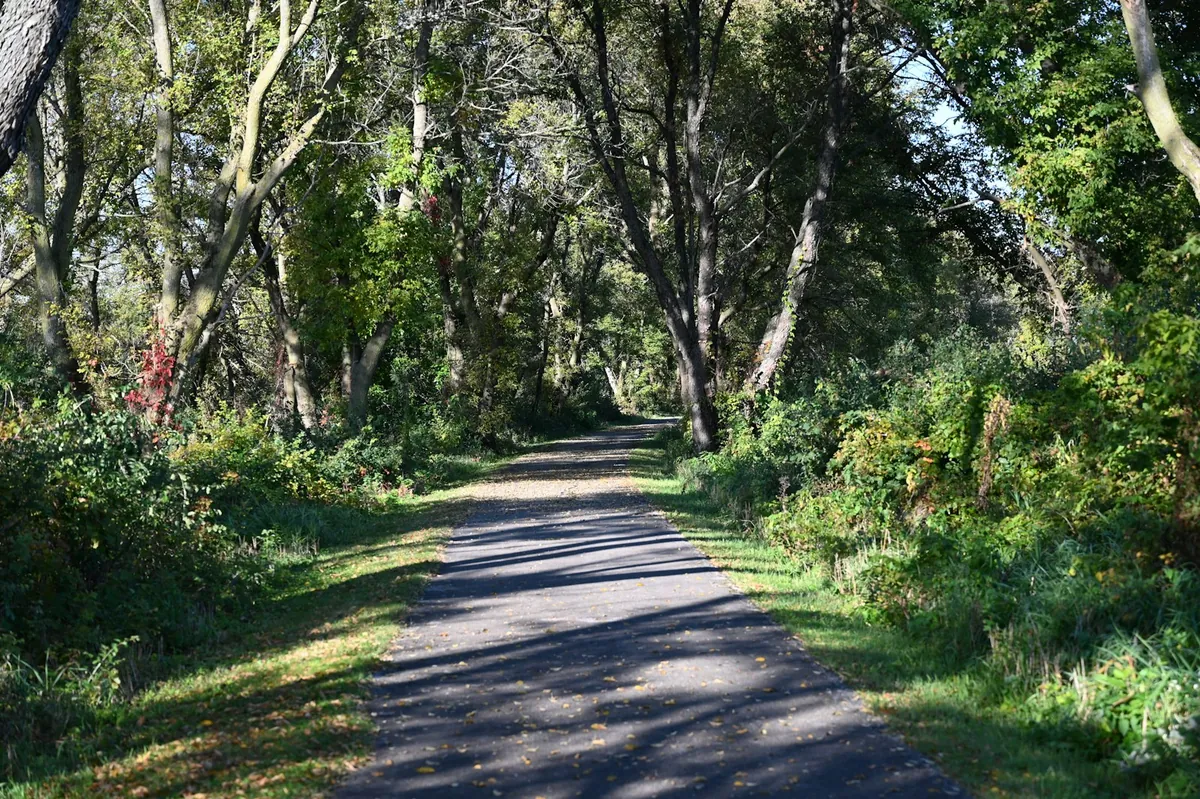
Most walks with a toddler are a negotiation with terrain. Kerbs, gravel, gates, a hill you did not notice until you were pushing a loaded buggy up it. The Trolley Trail is the local exception, and that is entirely down to what it used to be.
It follows the route of the old Portland Traction Company streetcar line, which is why it is flat, straight and continuous for miles. Railway engineers did not build gradients if they could avoid them, and a century later that turns out to be excellent for pushchairs.
What it actually is
A paved multi-use path running roughly six miles between Milwaukie and Gladstone, through residential neighbourhoods rather than countryside. It is shared by walkers, runners, cyclists and scooters, and it connects to parks, schools and the riverfront along the way.
Rail-trails like this exist all over the country for the same reason — the Rails-to-Trails Conservancy documents the wider movement — and their common characteristic is exactly the one that matters here: they are flat, because trains needed them to be.
You do not need to walk the length of it
Six miles is a route for a cyclist. With a three-year-old it is a number to ignore entirely.
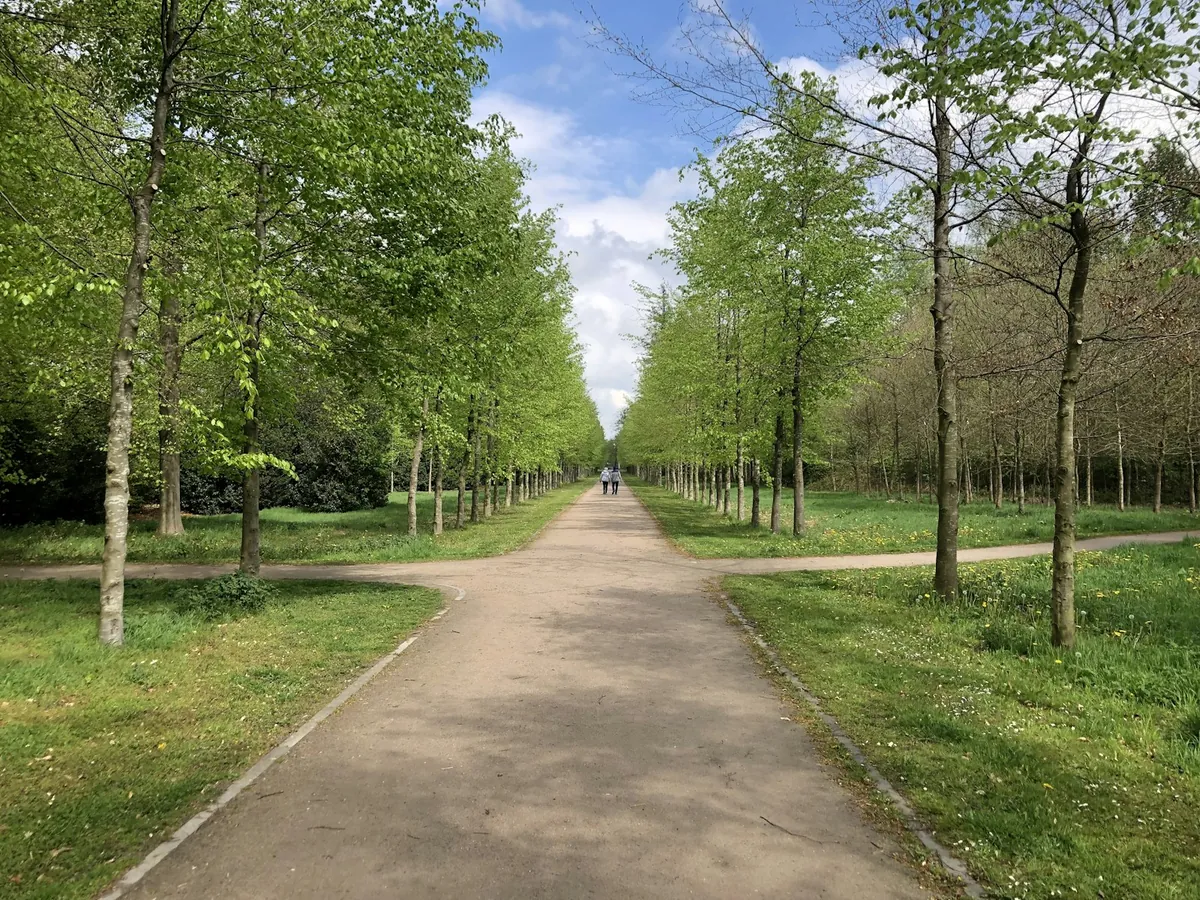
The way this works with small children is to pick an access point, go out for fifteen or twenty minutes, and turn around. The trail is not a destination; it is a long thin park that you dip into. Nobody is required to complete anything.
The northern end sits near the Milwaukie riverfront, which makes it easy to combine with downtown. Further south it runs through quieter residential stretches. Both work; the difference is mostly how much else is nearby.
It is a genuinely good place to learn to ride
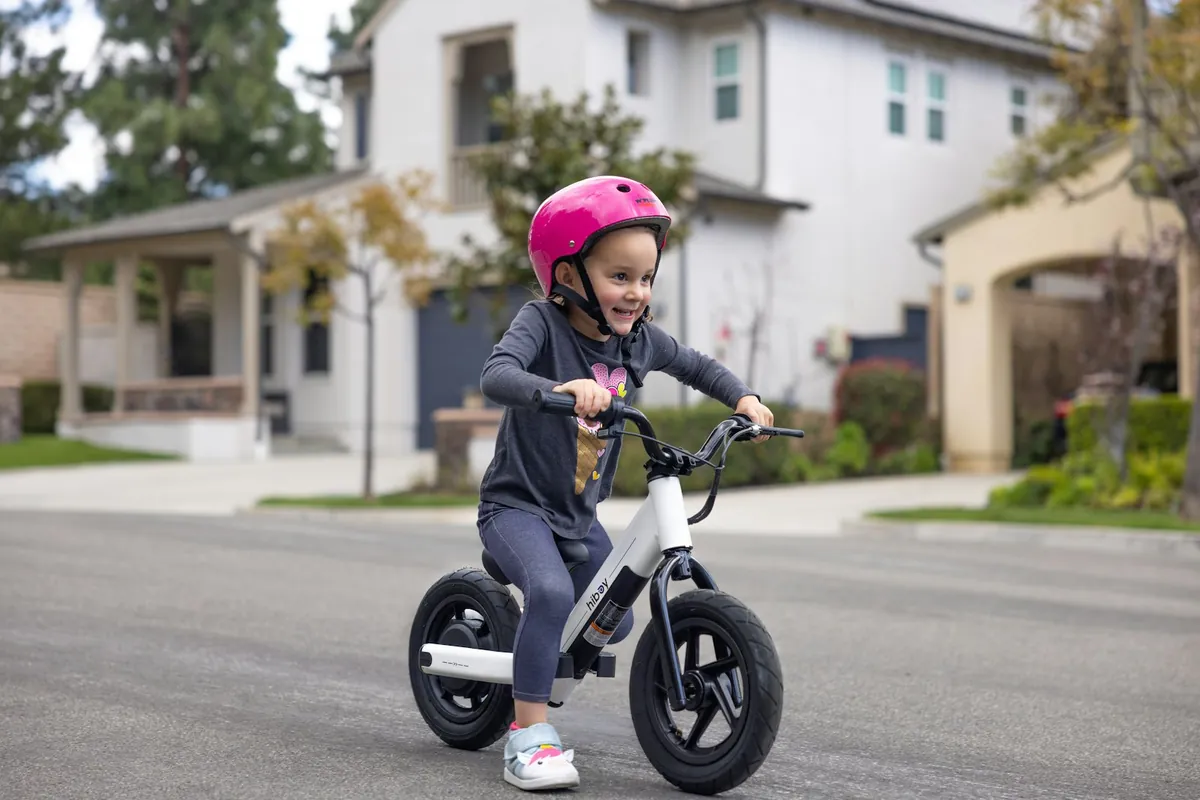
This is the trail’s best feature for this age group and the reason a lot of local families use it.
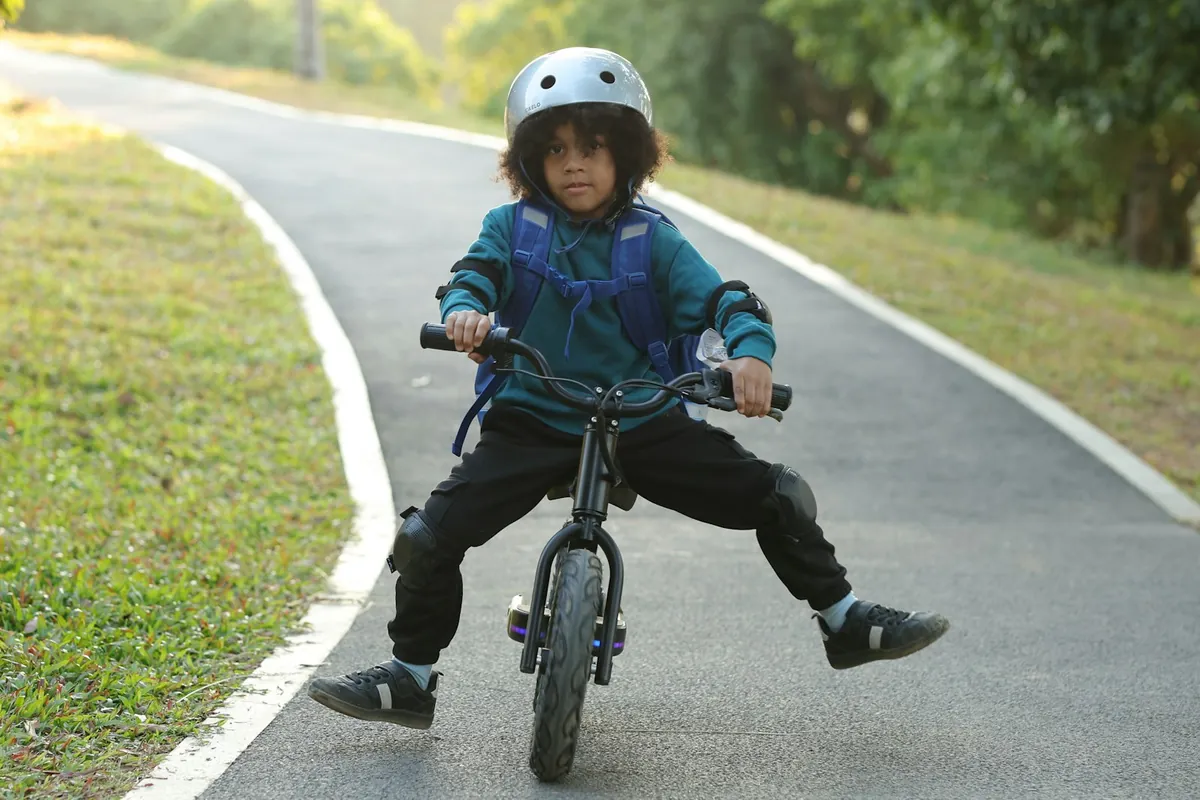
A flat, paved, continuous surface with no traffic on it is exactly what a child on a balance bike or a first pedal bike needs, and it is surprisingly hard to find. Pavements have kerbs and driveways; car parks have cars; parks have grass. Here they can get properly going.
Two practical notes. Go at a quiet time, because a wobbling four-year-old and a commuting cyclist are a poor combination. And teach the rule early: we keep to the right, and we stop when a grown-up says stop.
The crossings are the thing to plan around
The trail is continuous in the sense that the path keeps going, but it crosses roads. Some are quiet residential streets; at least one is a significant road with a signalised crossing.
With small children this is the part that needs a rule rather than vigilance. Agree before you set off that everybody stops at every crossing and waits to be told, and hold that line even at the crossings that look obviously empty — the point is the habit, not the individual road.
For a child on a bike, the workable version is stop and get off at every crossing. It is tedious and it removes any judgement call from a four-year-old who is concentrating on staying upright.
| Aspect | With young children |
|---|---|
| Surface | Paved and flat throughout |
| Pushchair | Easy, one of the best locally |
| Balance bikes | Excellent, at quiet times |
| Realistic distance | Fifteen to twenty minutes out, then back |
| Road crossings | Several — agree a stopping rule first |
| Cost | Free |
Toilets, parking and the practical bits
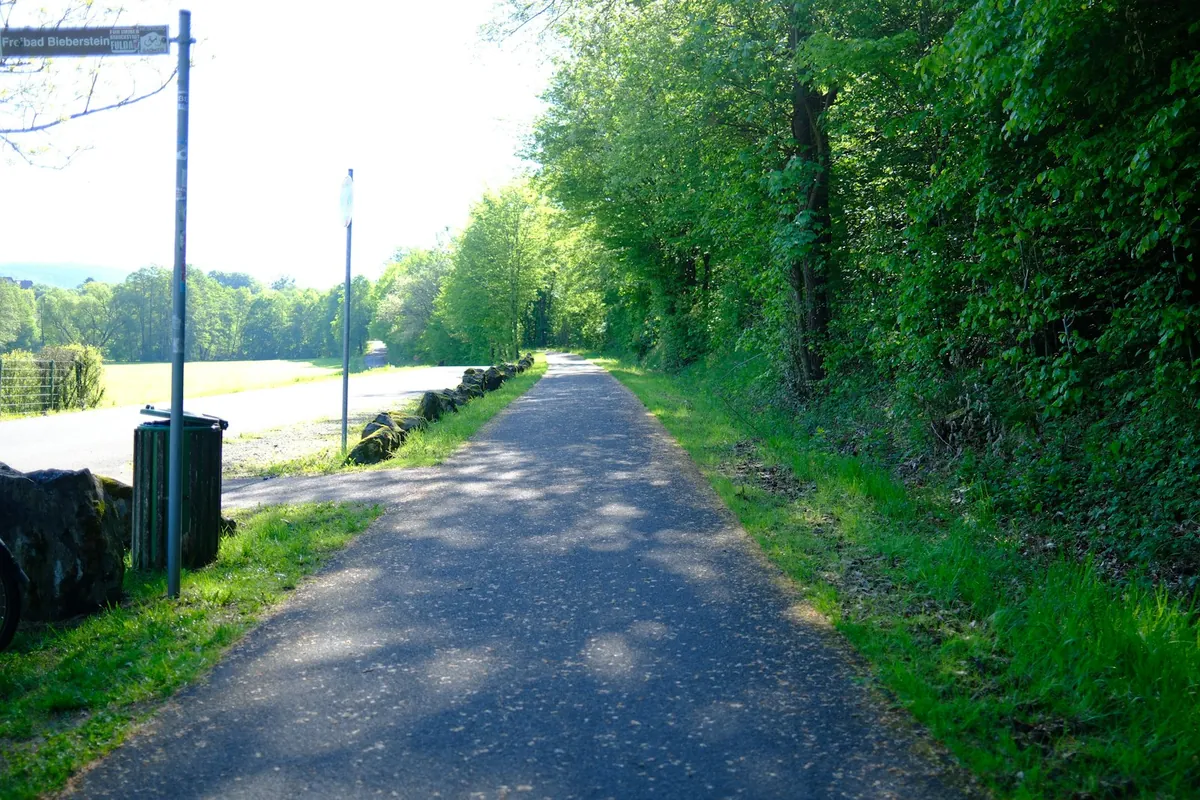
Facilities are not evenly spread along the route, so it is worth knowing where you are starting from and what is near it. There are parks along the way with facilities, and long stretches with none at all.
Because access points and facilities change with maintenance and seasonal closures, check the parks district’s current information rather than relying on this page — particularly if your plan depends on a toilet being open.
Parking is mostly on residential streets near the access points. If you are coming without a car, the northern end is walkable from downtown Milwaukie and the MAX, which our guide to getting around Milwaukie without a car covers.
Seasons on the trail
Being paved and flat means it works all year, which is not true of most local walking with small children, but the character changes a lot.
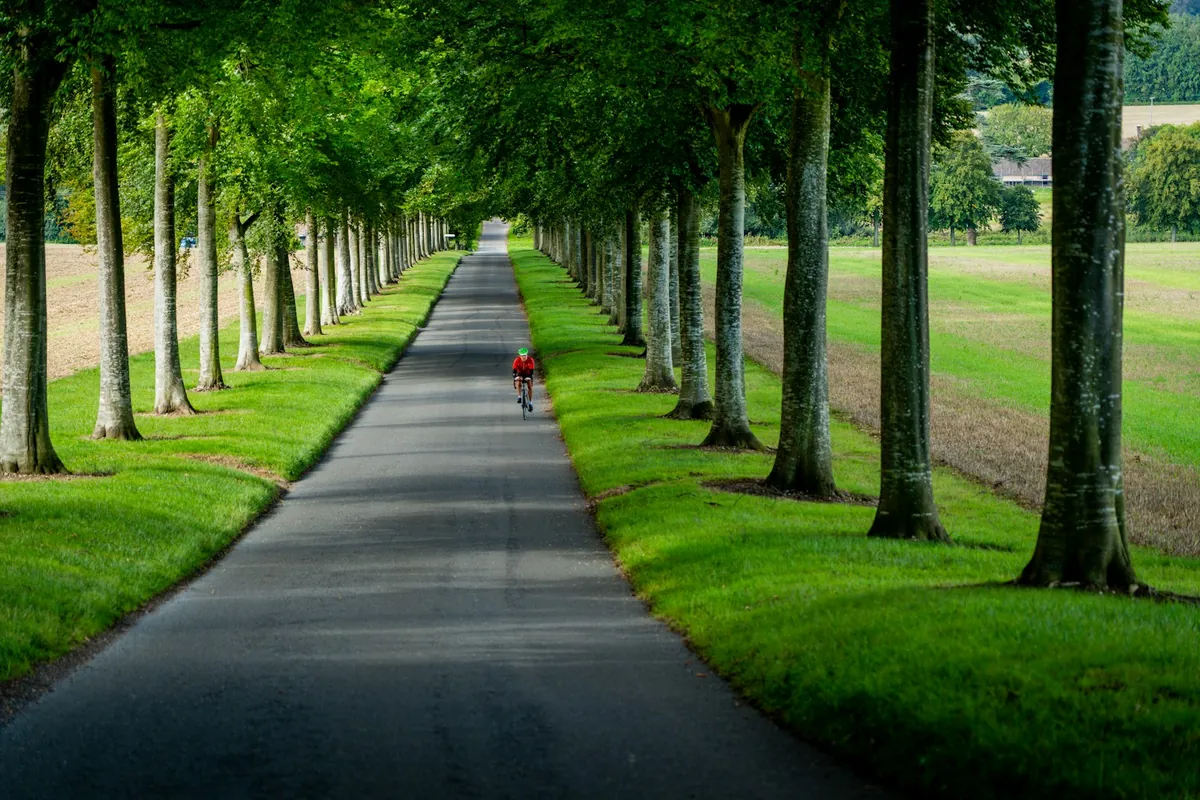
Through the wet months the surface drains and stays usable when grass paths have turned to mud, so this is the walk that survives February. It is also darker under the tree cover and gets gloomy early, which matters for a late-afternoon outing in winter.
In summer, the shaded stretches are a genuine advantage and the exposed ones are not. If you are going in the middle of a hot day, pick a section with tree cover and go early rather than after lunch, when a small child in a buggy is sitting in still, hot air.
What to take
The trail sells nothing, so whatever you want, you carry.
Water and a snack, because a fifteen-minute walk becomes a forty-minute one the moment a child finds a stick worth investigating. Waterproofs in the wet months, since the surface drains well but the sky does not care. A helmet if there is a bike. And the pushchair even for a child who mostly walks, because the return leg is where enthusiasm runs out.
One more: it is a shared path, so a child weaving across the full width is a genuine problem for cyclists coming the other way. Keeping to one side is worth teaching from the first visit rather than the fifth.
Making it part of something bigger
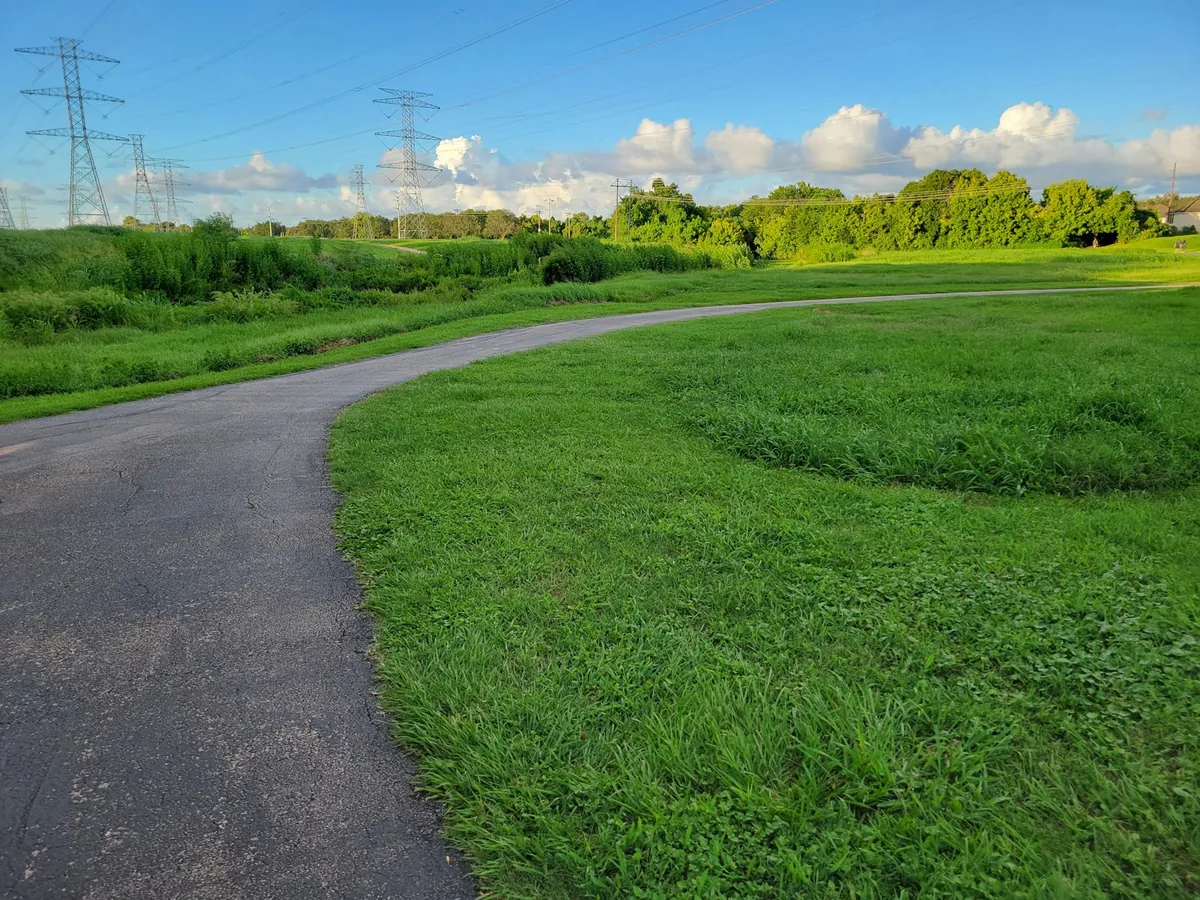
The trail works best as one component of a morning rather than the whole of it, because twenty minutes of walking is about the honest limit before a small child wants something else to happen.
From the northern end, the riverfront and downtown Milwaukie are close enough to add on. Our guide to a family day out in downtown Milwaukie puts a fuller route together, and our list of free things to do with kids in Milwaukie covers what else costs nothing nearby.
If the weather turns, our visit page has our opening hours.
Frequently asked questions
Is the Trolley Trail suitable for a pushchair?
Yes, and it is one of the easier local options. It is paved, flat and continuous because it follows a former streetcar line, which is exactly what makes it comfortable with a loaded buggy.
How long is the Trolley Trail?
Roughly six miles between Milwaukie and Gladstone. With young children that number is best ignored — pick an access point, walk fifteen or twenty minutes and turn around.
Is it a good place for a child to learn to ride a bike?
It is one of the better local options: flat, paved, continuous and free of traffic. Go at a quiet time, and teach keeping to one side from the first visit.
Are there road crossings on the Trolley Trail?
Yes, several, ranging from quiet residential streets to a significant road with a signal. Agree before setting off that everyone stops at every crossing, and have children on bikes get off and walk across.
Are there toilets along the trail?
Not evenly. There are parks with facilities along the route and long stretches without. Check the parks district’s current information before setting out if your plan depends on one.