Here is the thing nobody says out loud at a first birthday: the birthday child does not know it is happening. They will not remember the day, they have no concept of their own age, and the balloon arch means nothing to them at all.
That is not a reason to skip it. A first birthday is a real milestone — mostly for the adults who got through the year — and it is worth marking. It just goes considerably better when it is planned around who a one-year-old actually is.
What a one-year-old can actually do
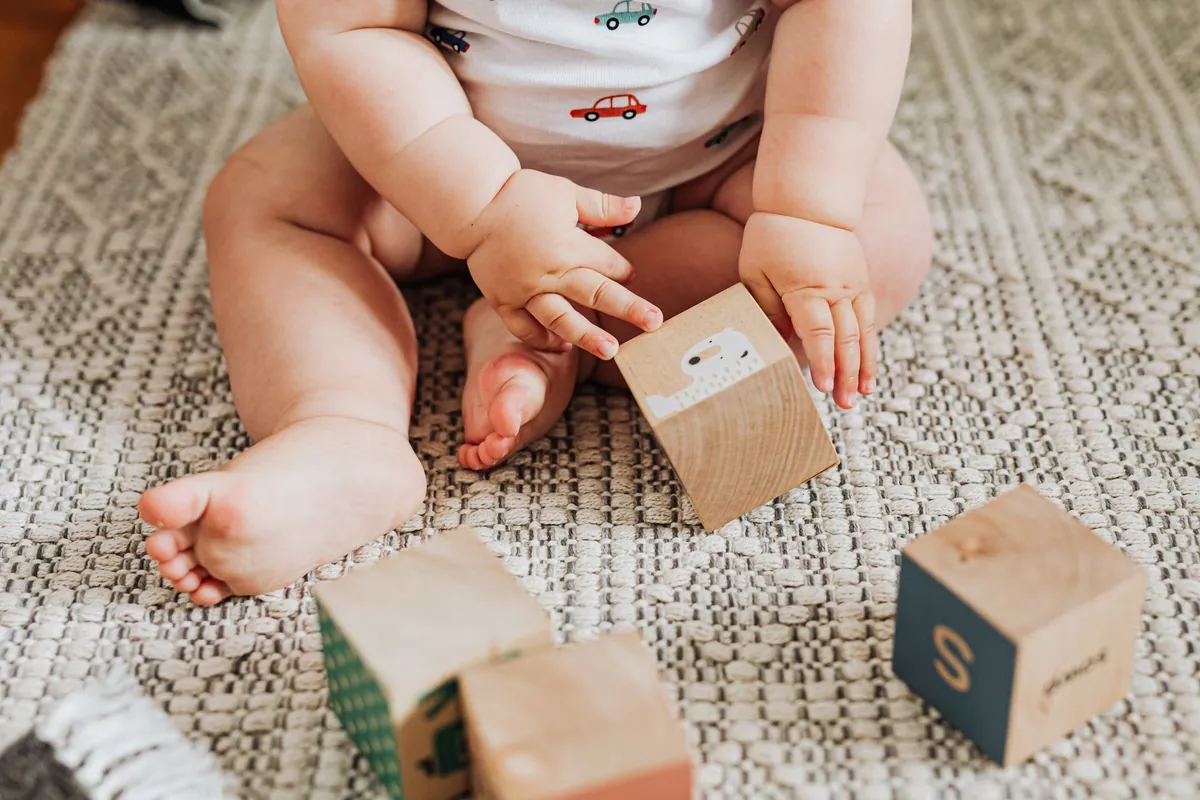
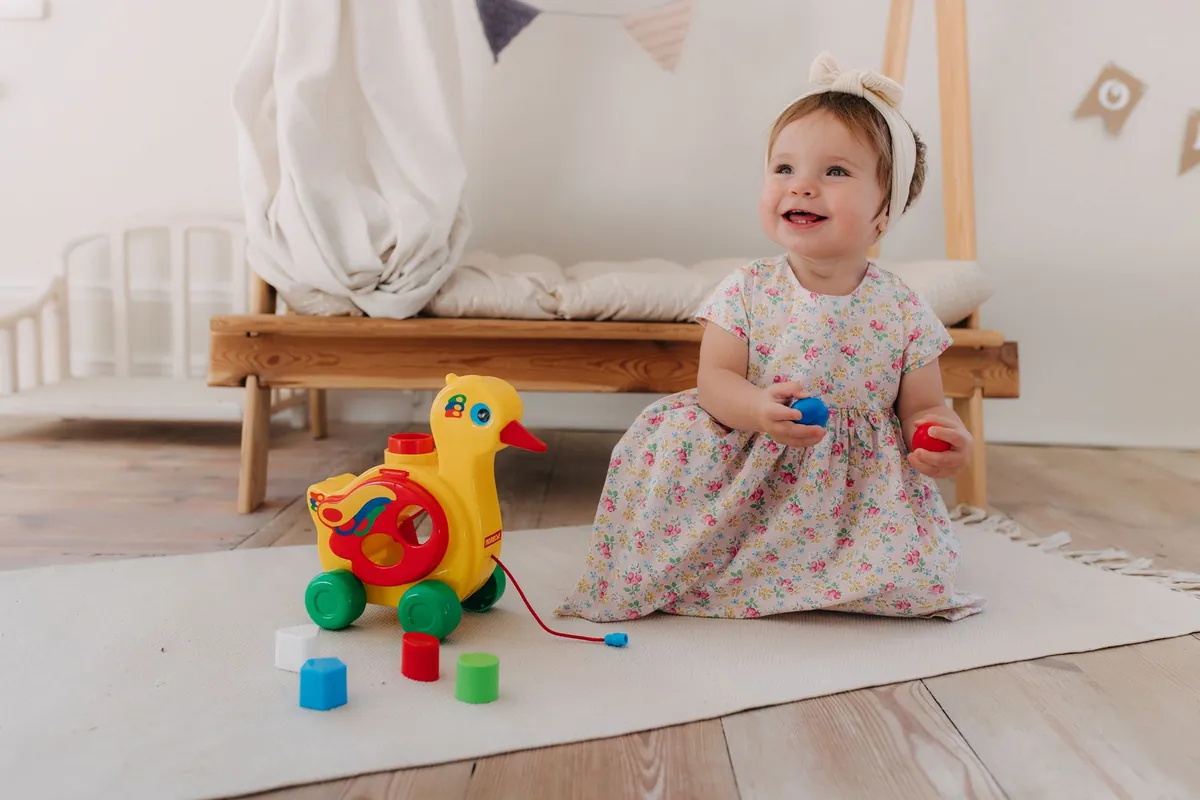
At twelve months most children are pulling up, cruising along furniture and maybe walking. They understand far more than they can say, they are wary of unfamiliar faces, and they play alongside other children rather than with them.
That last point quietly determines the whole shape of the day. Structured games do not work at this age, because group play has not developed yet. What works is a floor, some toys, and enough space that nobody is climbing over anybody. UNICEF’s summary of developmental milestones at one year is a useful reality check if you are planning something ambitious.
Time it around the nap, not the other way round
This is the decision that determines whether the day is lovely or grim, and it gets made last far too often.
A one-year-old on one nap usually has a good window mid-morning and another in the late afternoon. A child still on two naps has a narrower gap in the middle. Work out where your child’s genuinely cheerful hours sit this month, then put the party inside one of them. Everything else — who can come, what gets served — bends around that.
Resist the urge to cap the nap short so the party can start earlier. A tired one-year-old at their own party is the classic first-birthday photograph, and nobody enjoys the hour that follows it.
How long, and how many
Ninety minutes is plenty. The engaged part — the part where the birthday child is actually participating — is more like forty minutes in the middle, with arrivals at one end and lingering adults at the other.
| Element | What works at one | Why |
|---|---|---|
| Length | 60–90 minutes | Beyond that you are running on borrowed time |
| Child guests | A handful, ideally known | Unfamiliar faces are hard at this age |
| Adult guests | However many the room fits | They are the actual audience |
| Games | None | Group play has not developed yet |
| Music | Quiet, background | Loud rooms overwhelm quickly |
| Singing | Once, and briefly | A circle of singing faces is startling |
On guest numbers, the honest question is who this is for. If the answer is grandparents, close friends and the people who held the baby at three weeks, invite them and stop worrying about whether there are enough children. There do not need to be.
The cake, and the cake smash
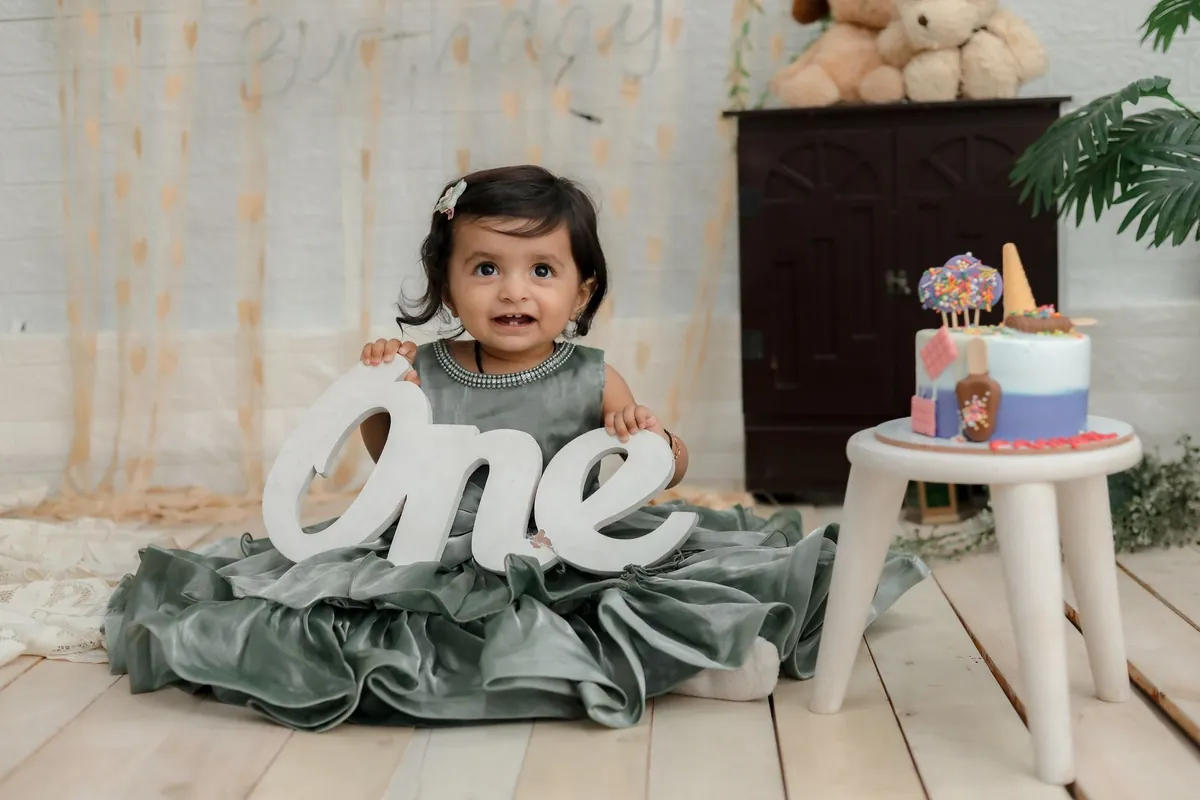
Some one-year-olds demolish a cake with visible joy. Others look at it, look at you, and cry. Both are completely normal, and you cannot tell in advance which you have.
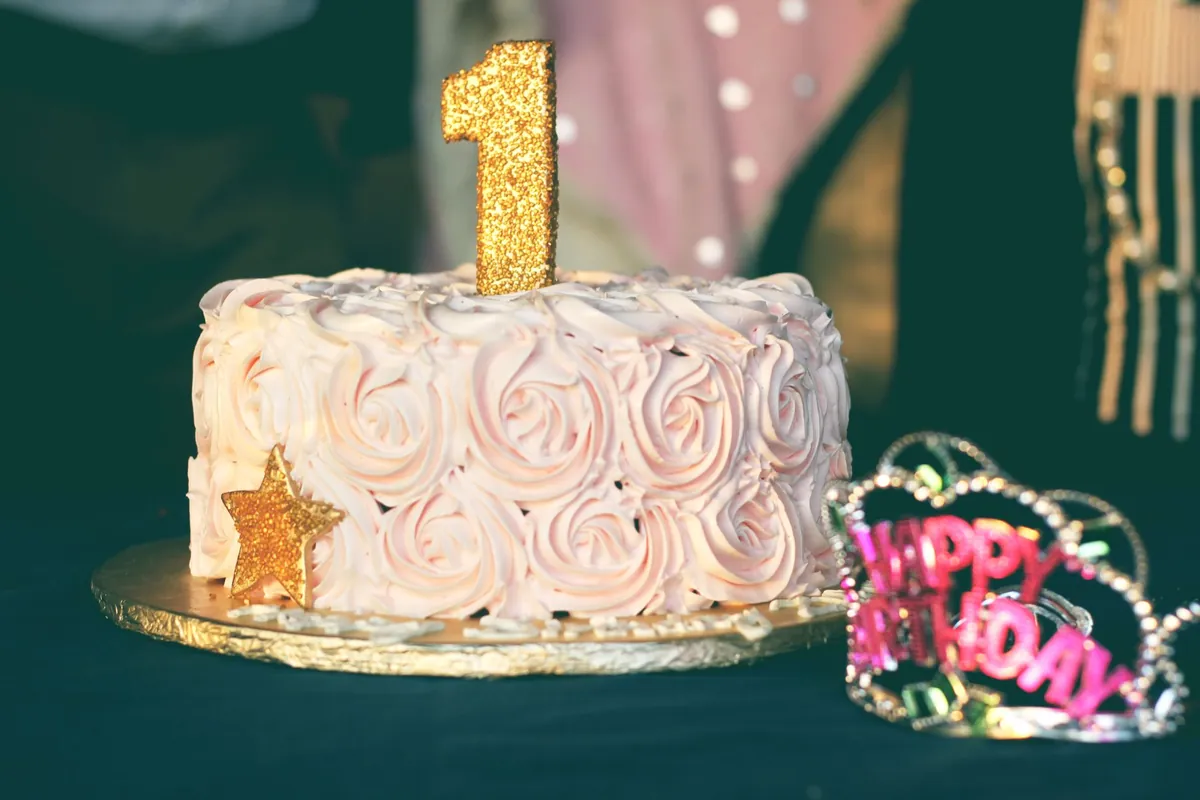
Two practical things help. Keep the party cake simple, because it is going to be eaten by adults. And if you want the messy cake-smash photographs, do them on a different day, in a quiet kitchen, with nobody watching. A one-year-old surrounded by a semicircle of phones is a one-year-old who freezes.
On the singing: do it once, keep it short, and consider not doing it in a full circle with everyone facing inward. A ring of loud adults is genuinely startling at this age.
Food that does not become a project
Nobody at a first birthday needs a catered lunch. The adults want something to hold while they talk, and the babies want something soft they can gum.
Put the baby food somewhere separate from the adult food, low enough to reach and clear of anything hot. Ask about allergies on the invitation — at this age families are often still discovering them — and label anything with nuts. Finger food beats anything needing cutlery, for both age groups.
Keep drinks in closed cups near the floor. It is the least glamorous piece of advice on this page and it will save you one specific disaster.
Presents, and what to ask for
A one-year-old does not need more toys, and most parents of a one-year-old are already running out of places to put things. It is entirely reasonable to say so on the invitation.
The requests that go down well are specific and small: a book instead of a toy, something for the next size up in clothes, or a contribution to one larger thing. Vague instructions like “no presents please” tend to get ignored, because people arrive with something anyway and then feel awkward. Naming one concrete alternative is easier for everyone to follow.
Whatever you ask for, open them afterwards rather than during. A one-year-old opening gifts in front of an audience is a slow event with a limited payoff, and the wrapping paper is usually the part they wanted.
At this age the adults stay — see should parents stay at a birthday party? for how that changes later.
Where to hold it
Home is cheapest and most familiar, which matters at an age when unfamiliar rooms are already a lot. The trade is that you host, clean and reset the room afterwards, on a day you are already tired.
A venue moves the mess elsewhere and gives you a defined finish. What matters at one is less about facilities and more about floor space, somewhere to put a sleeping baby down, and a room that is not too loud. Our guide to how long a children’s party should run goes into timing across the age range, and if your child finds noise and crowds hard, our guide to planning a calmer party applies just as much at one as at four.
Lower the bar, on purpose
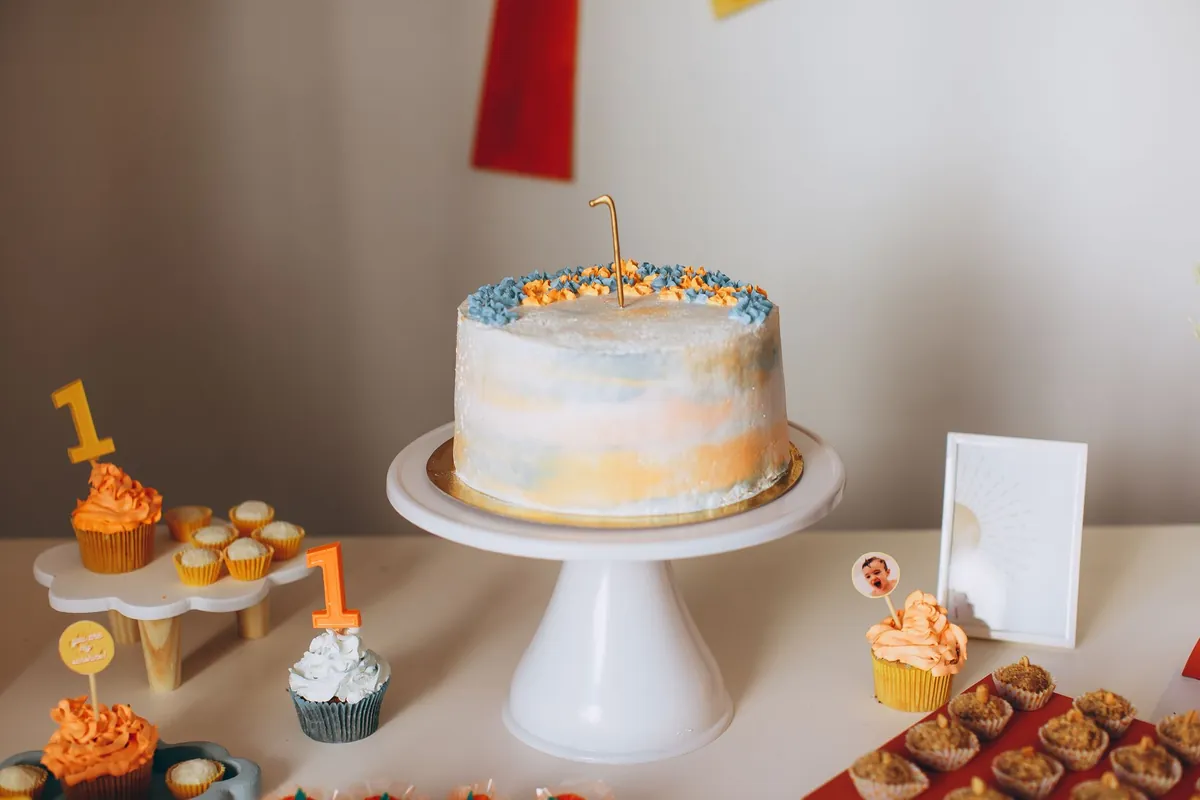
A successful first birthday is not a beautiful one. It is: the people who love this child were in a room together, the child was mostly cheerful, somebody took a photograph, and everyone went home before the wheels came off.
If your one-year-old spends the party clinging to you and ignoring the cake, that is not a party that went wrong. That is a one-year-old, behaving exactly as advertised.
If you are thinking about a venue for the day, our birthday parties page explains what we offer, and you can get in touch to talk through what would suit a first birthday.
Frequently asked questions
How long should a first birthday party be?
Sixty to ninety minutes. The genuinely engaged part is more like forty minutes in the middle, with arrivals at one end and adults chatting at the other. Anything longer runs past what a one-year-old can manage.
What time of day is best for a first birthday?
Whichever window your child is reliably cheerful in this month, usually mid-morning or late afternoon depending on naps. Build the party around the nap rather than cutting the nap short for the party.
How many children should I invite to a first birthday?
A handful, and ideally ones your child already knows. One-year-olds play alongside each other rather than together, so more children does not mean more fun — it mostly means more noise.
Do we need party games at a first birthday?
No. Group games rely on a kind of cooperative play that has not developed at twelve months. Floor space, familiar toys and room to move work far better than anything structured.
Should we do a cake smash at the party?
It often works better on a separate day, somewhere quiet, without an audience. A ring of adults with phones tends to make a one-year-old freeze rather than dive in.