

You are standing in a doorway holding a coat, trying to work out from the room whether you are supposed to be here. Half the parents have gone. Half are hovering. Nobody said which it was, and the invitation did not mention it.
Stay or drop off is the single most-asked question about children’s parties and the one most often left unanswered. It is worth deciding deliberately, whether you are hosting or attending.
Under five, stay
Below about five, almost every party is a stay party, and the reasons are practical rather than sentimental.
Young children cannot yet manage a wobble without a familiar adult, and a host who has taken on ten small children plus the cake plus the timings cannot also be the person who comforts a crying three-year-old. The adults are part of the supervision, and taking them away does not work.

There is no fixed age at which this changes, and the range between children is wide. Some five-year-olds are entirely comfortable being left; some seven-year-olds are not. The Cleveland Clinic’s overview of separation anxiety is a useful reminder that the variation is normal rather than something to be corrected.
Roughly how it shifts by age
| Age | Usual expectation | Notes |
|---|---|---|
| Under 3 | Adults stay, always | The party is partly for the adults anyway |
| 3–4 | Adults stay | Ratios matter more than anything else |
| 5–6 | Stay unless the invitation says otherwise | Some children are ready, many are not |
| 7–8 | Drop-off is common | Still worth confirming with the host |
| Any age | Follow the child, not the number | Readiness varies enormously |
The one rule that holds at every age: whatever the invitation says, the host decides. If you are unsure, ask. Nobody has ever been annoyed by that message.

If you are hosting, say so on the invitation
Two words solve this. “Parents welcome” or “drop-off fine” saves every guest a private agonising session and saves you six identical messages the day before.
If you want the adults to stay, it helps to say why in passing — that you have a small venue, or that you want it to be a relaxed morning — and to make staying pleasant. A pot of coffee and somewhere to sit converts a room full of hovering adults into something that feels intentional.
If it is a stay party
- Say it on the invitation, not in a follow-up message.
- Count the adults in your numbers. Twelve children can mean twenty-two people.
- Provide somewhere to sit. Standing adults crowd the play space.
- Do something for them. Coffee costs little and changes the mood.
- Tell the venue. Adult numbers affect capacity and catering.
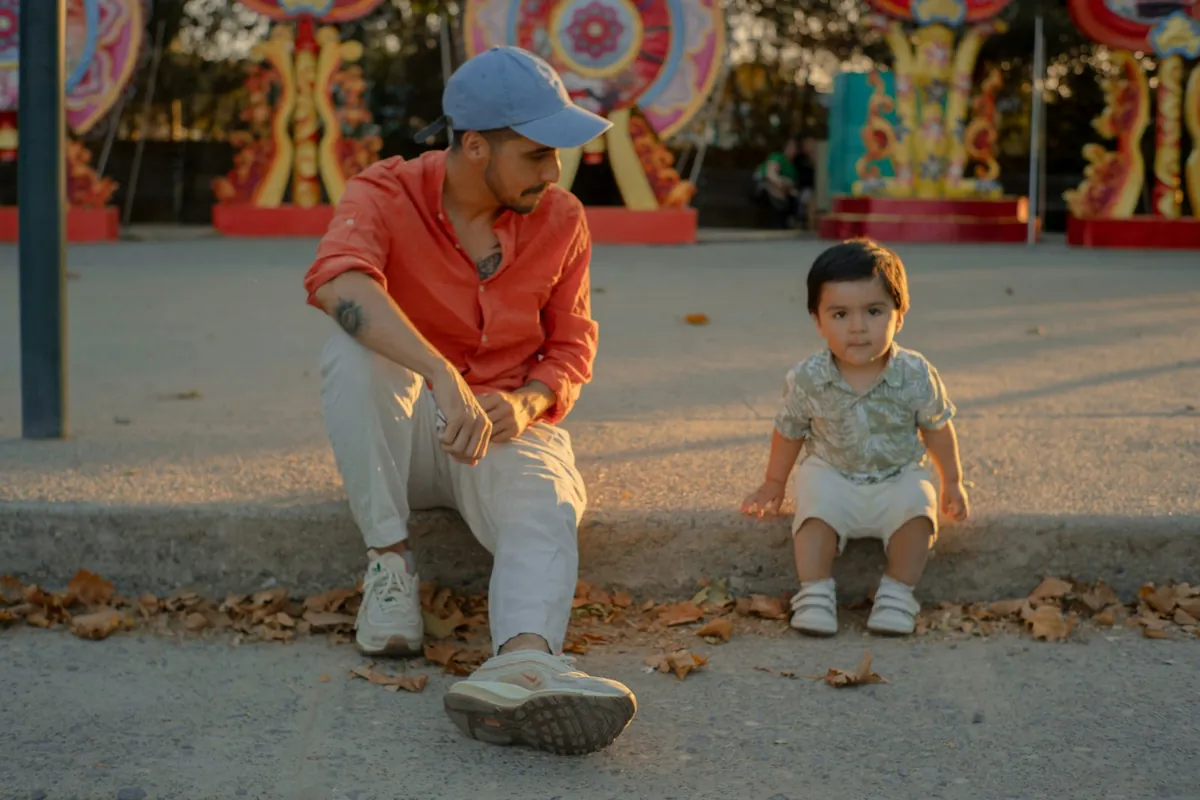
If it is a drop-off party
Hosting a drop-off party is a bigger undertaking than it looks, because you have taken on sole responsibility for other people’s children.
Collect mobile numbers as people leave, not before. Ask about allergies in writing rather than being told at the door. Have more adults than you think you need, and give one of them the single job of watching the room rather than running the party. Say the finish time clearly and mean it, because a drop-off party that overruns is a logistical problem for eight families at once.
If a child is distressed when their parent tries to leave, say so rather than insisting it will pass. Most of the time it does; when it does not, the parent would far rather stay than be called twenty minutes later.
Our fuller guide to being a good party guest covers the rest of it.
If you are the guest
Read the invitation, and if it does not say, ask. If you are staying, be useful without taking over: keep an eye on your own child, help with the tidy-up at the end, and resist managing the running order.
If it is drop-off and your child is not ready, that is not a problem to hide. Tell the host you would rather stay this time. Nobody minds, and it is considerably better than a phone call partway through.
Two practical courtesies that hosts notice. Arrive on time, because the first ten minutes are the most chaotic. And leave on time, because a host who has booked a room by the hour is watching the clock even if they are too polite to say so.

The transition itself
If you are dropping off for the first time, the mechanics matter more than the pep talk.
Say clearly that you are going and when you will be back, in terms they understand — after the cake, when the games finish. Do not slip away without saying goodbye, which usually produces a worse reaction later. Keep the goodbye short: a long, drawn-out departure makes it harder rather than easier.
Then actually go. Hovering in a doorway where your child can see you is the version that guarantees tears.

The awkward middle case
The hardest situation is not a clear stay party or a clear drop-off party. It is the one where half the parents leave and half do not, usually because nobody said which it was.
If you are hosting and this happens, it is worth a quick word: tell the remaining adults they are very welcome to stay, and tell the ones edging towards the door that you are happy either way. Ambiguity is far more uncomfortable than either answer.
If you are a guest in that room, the deciding factor is your own child rather than what anybody else is doing. A four-year-old who is fine either way does not need you to stay because two other parents did, and one who is not fine does not become fine because everyone else left.
When your child finds parties hard generally
Some children find the whole format difficult regardless of who stays — the noise, the crowd, the singing. That is worth planning around rather than pushing through.
Arriving early to a quieter room, agreeing a place to retreat to, and leaving before the end all help. Our guide to planning a calmer birthday party is written for hosts but works just as well as a checklist for a guest.
For the rest of the invitation, our guide to invitations and guest lists covers what else belongs on it, and our full party planning guide covers the day itself. You can see what we offer on our birthday parties page.
Frequently asked questions
At what age can you drop a child at a birthday party?
Drop-off becomes common around seven or eight, is variable at five and six, and is not appropriate below five. Readiness varies enormously between children, so follow the child rather than the number.
Should the invitation say whether parents stay?
Yes. “Parents welcome” or “drop-off fine” is two words and saves every guest a private agonising session, plus the host a run of identical messages the day before.
What if my child is not ready to be left?
Tell the host you would rather stay this time. Nobody minds, and it is much better than being phoned partway through. There is no need to explain or apologise.
Do adults count towards party numbers?
They should. Twelve children at a stay party can mean twenty-two people in the room, which affects capacity, seating and catering. Tell the venue how many adults you expect.
How should I say goodbye at a drop-off party?
Clearly and briefly. Say you are going and when you will be back in terms they understand, then leave. Slipping away without saying goodbye, or hovering where they can see you, both make it worse.