
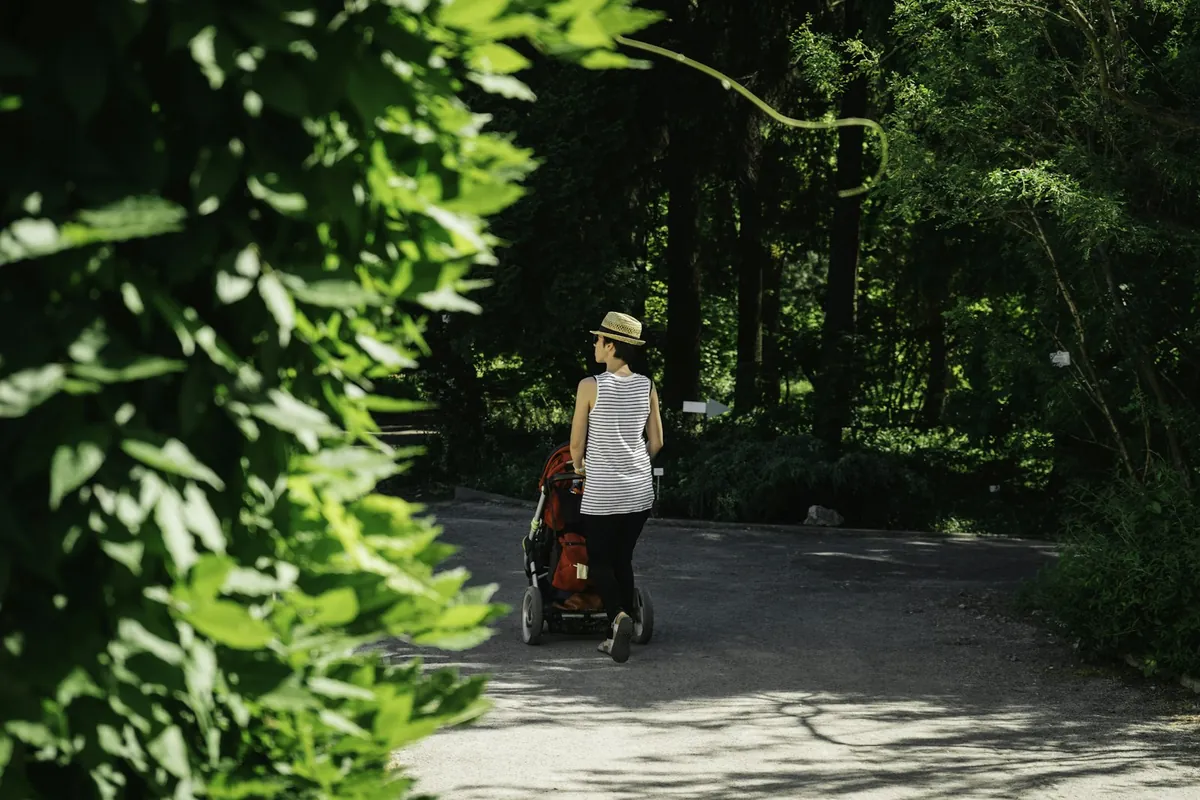
There is a specific paralysis that sets in somewhere in the second week. The baby is fine, you are more or less upright, and going outside has somehow become a project with too many unknowns attached to it.
The first outing is almost entirely about the adult. The baby does not care where they are. What is actually being established is that leaving the house is possible, and that is worth doing early and badly rather than later and perfectly.
When to go is a question for your own clinician
Advice on this genuinely varies, and it varies for good reasons: it depends on the baby, on whether they were born early, on the time of year and on what is going around locally.
Some clinicians are relaxed about fresh air from the first days while being more cautious about crowded indoor spaces for the first weeks. Others take a different view. The sensible move is to ask yours rather than to average the internet, and Children’s Wisconsin’s guidance on a first trip out with a baby is a reasonable starting point for the questions to ask.
Whatever you are told, the distinction that usually matters is between outdoors and busy indoor spaces rather than between inside and outside your own front door.
Make the first one absurdly small
Fifteen minutes. Around the block. That is a complete and successful first outing.
The temptation is to make the first trip worth the effort of getting ready, which is exactly how it becomes a two-hour expedition that goes wrong in the middle. A short first attempt tells you what you forgot, at a distance where forgetting it does not matter.
Extend from there. Three or four short trips teach you more about your own kit and timings than one ambitious one.
Timing it
Leave just after a feed and a change, when you have the longest clear stretch in front of you. That sounds obvious and it is the thing most often got wrong, usually because getting ready takes longer than expected and the window closes while you are still finding your keys.
Work backwards. If you want to be out at eleven, start getting ready at ten. In the early weeks the gap between deciding to go and actually leaving is routinely forty minutes, and planning for that is far less demoralising than being surprised by it every time.
| Outing | Realistic at | Why |
|---|---|---|
| A walk around the block | Almost immediately | Outdoors, no commitment, turn back any time |
| A quiet cafe | Early, at an off-peak hour | Somewhere to sit and feed, easy to leave |
| A friend’s house | Early | Everything you need, nobody watching |
| A supermarket shop | A little later | Longer, busier, harder to abandon |
| A long drive or a full day | Later still | Feeds and changes are harder to place |
What to carry, and what not to
Almost everyone overpacks for the first month and then swings too far the other way. The short version is: enough for one incident more than you expect.
Actually needed
- More nappies than the trip warrants, plus wipes and a changing mat.
- One full change of clothes for the baby, and a spare top for you.
- Nappy sacks, because not everywhere has a bin.
- Whatever feeding requires, whether that is a cover you like or a made-up bottle.
- A muslin. Several uses, no substitute.
- Water and a snack for yourself, which is the item most often forgotten.
Keep a restocked bag by the door rather than packing it each time. The single biggest barrier to going out in the early weeks is the preparation, and removing that removes most of the excuse.
Sling or pushchair
Both, eventually, and it is worth knowing what each is good for rather than choosing a side.
A sling keeps your hands free, gets you through doorways and up steps without negotiation, and settles many newborns better than anything else. A pushchair carries the bag, gives you somewhere to put a sleeping baby down, and is considerably easier in hot weather or on a long walk.
For a first outing, whichever you have practised with at home. Working out a wrap for the first time on a pavement in the cold is a bad introduction to both.
Where to go first
Outdoors and uncomplicated. A park, a quiet street, a riverside path — somewhere you can turn around at any point without it being a decision.
When you move to indoor places, the qualities that matter are unglamorous: somewhere to sit that is not a stool, room for a pushchair, a changing table you have confirmed exists, and a quiet hour. A cafe at three in the afternoon is a different building from the same cafe at midday.
Our guide to when babies can go to a play cafe covers what a first visit somewhere like that looks like, and our visit page has our opening hours if you want to come at a quiet time.
Weather, and the bits of kit that matter
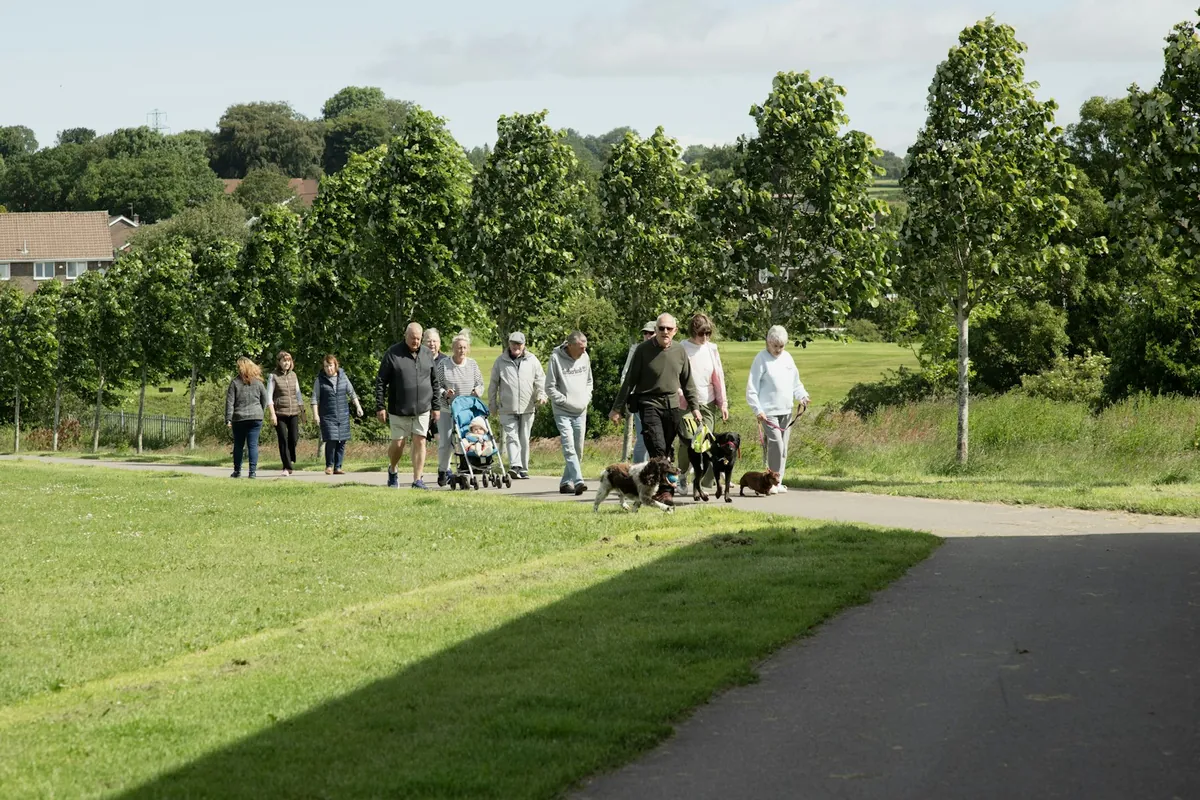
In this region the weather is the main constraint on a daily walk, and getting two or three things right removes most of the excuses.
A rain cover for the pushchair is the single most useful item, because it converts most wet days from impossible to unremarkable. A waterproof for yourself matters more than one for the baby, who is under a hood already. And in cold weather, dress the baby in layers you can remove, since a car or a warm shop turns a well-wrapped newborn into an overheated one very quickly.
The rule people find most useful is one more thin layer than you are wearing, adjusted by touch rather than by the forecast — and taken off indoors rather than left on.
The part nobody warns you about
The hardest bit of the first few outings is rarely practical. It is that you are doing something ordinary while feeling entirely unlike yourself, in public, on very little sleep.
It gets easier quickly, and it gets easier faster if the outings keep happening. A short walk most days does more for the adult than a big trip once a fortnight, and it is one of the few things in the newborn period with a reliable return.
It is also how you start meeting people, which matters more than it seems at the time. Our guide to meeting other parents covers that, and if you already have an older child, days out with a baby and a toddler deals with the two-child version.
Frequently asked questions
When can you take a newborn out for the first time?
Advice varies with the baby, the season and local circumstances, so ask your own clinician. The distinction that usually matters is between fresh air outdoors and busy indoor spaces rather than between inside and outside the house.
How long should a first outing be?
Fifteen minutes is a complete first outing. A short trip tells you what you forgot at a distance where it does not matter, and three or four short trips teach you more than one ambitious one.
What should I pack for a first trip out with a newborn?
More nappies than the trip warrants, wipes and a mat, one full change for the baby and a spare top for you, nappy sacks, whatever feeding requires, a muslin, and water and a snack for yourself.
Sling or pushchair for a newborn outing?
Whichever you have already practised with at home. A sling keeps your hands free and handles steps; a pushchair carries the bag and gives a sleeping baby somewhere to be put down.
Where is a good first place to go with a newborn?
Somewhere outdoors and uncomplicated that you can leave at any moment — a park, a quiet street, a riverside path. Indoor places come next, chosen for seating, pushchair space, changing facilities and a quiet hour.