
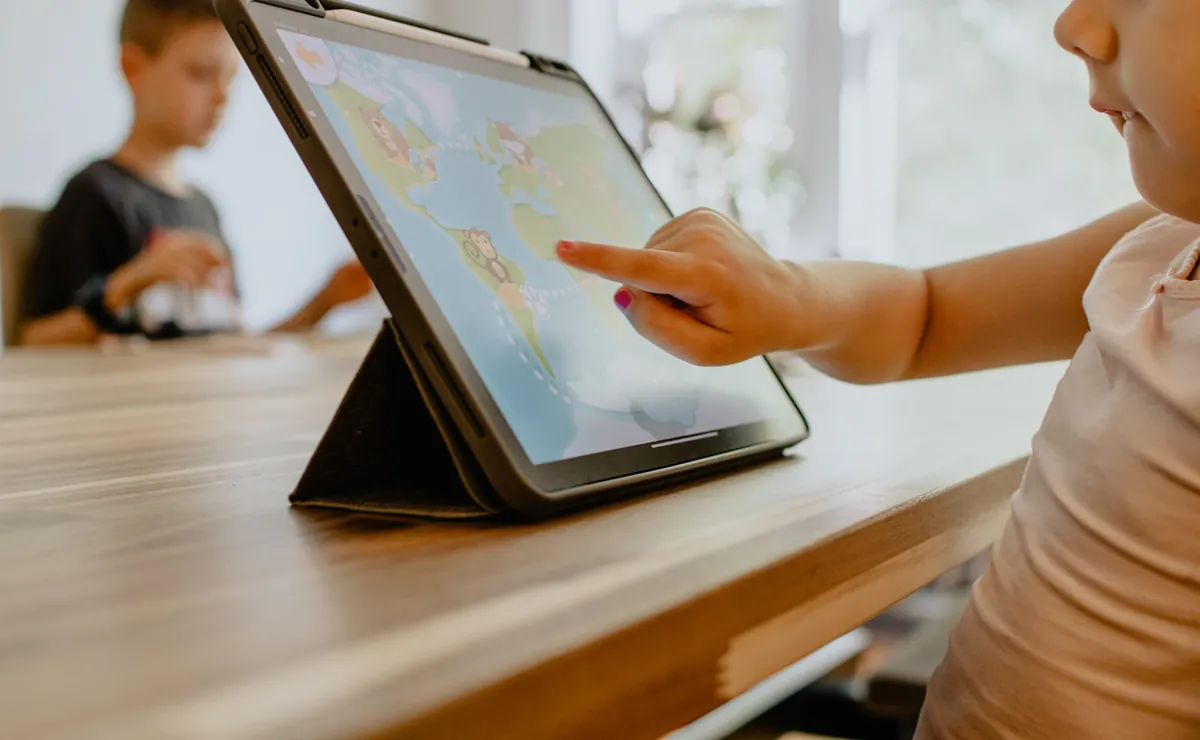
A child is handed a tablet at a cafe table. Within about four seconds someone at the next table has formed an opinion, and within four minutes it is on the internet as a moral question.
It is one of the most watched and least useful arguments in parenting, largely because it is conducted between people in completely different situations. What follows is not a verdict. It is a way of deciding before you are standing in the middle of it.
What the guidance actually says
The published recommendations are more specific than the argument usually is. Broadly: very little screen media before two beyond video calls, and a modest daily limit of good-quality content between two and five, with an adult involved where possible.
Common Sense Media’s overview of screen time is a reasonable place to read the current thinking, and the thing worth noticing is that most guidance is about the overall diet rather than any individual twenty minutes. That distinction is the whole practical point.
The cafe is the wrong place to have the argument
Whatever your position, the middle of a restaurant with a hungry three-year-old is the worst possible moment to be deciding it. That is the situation in which every parent makes the choice they had not planned to make.
Deciding beforehand is most of the work. Not deciding “never” or “always” — deciding what this particular outing is for and what you will do if it goes long. A position held in advance is calm; a position improvised at the table is whatever gets you through, and then feels bad afterwards.
The honest case on both sides
| Argument | What is true in it | What it overstates |
|---|---|---|
| It teaches them not to cope | Waiting is a skill, and it is practised | One meal does not undo it |
| They miss the conversation | Meals are where a lot of talk happens | Not every meal is a conversation |
| It is the only way we eat out | Some families genuinely need it | Often untested against alternatives |
| It ruins their attention | Habits build over time | Attributed to single occasions far too readily |
| Everyone is judging | Some people are | Their opinion has no consequences |
Two things follow from this. The frequency matters far more than the instance, and the alternatives are worth actually trying rather than assuming they will fail.

What tends to work instead
Most of the difficult stretch is not the meal. It is the twenty minutes before the food arrives, which is a specific problem with specific solutions.
Worth carrying
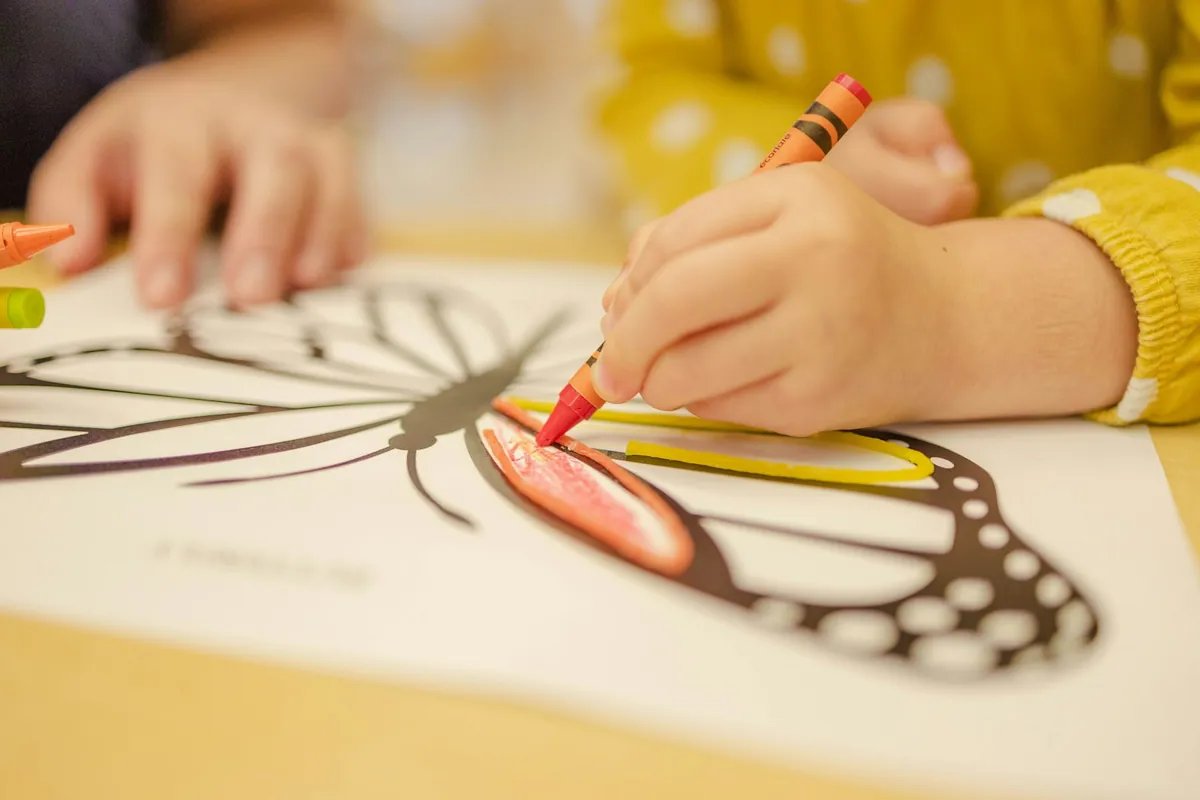
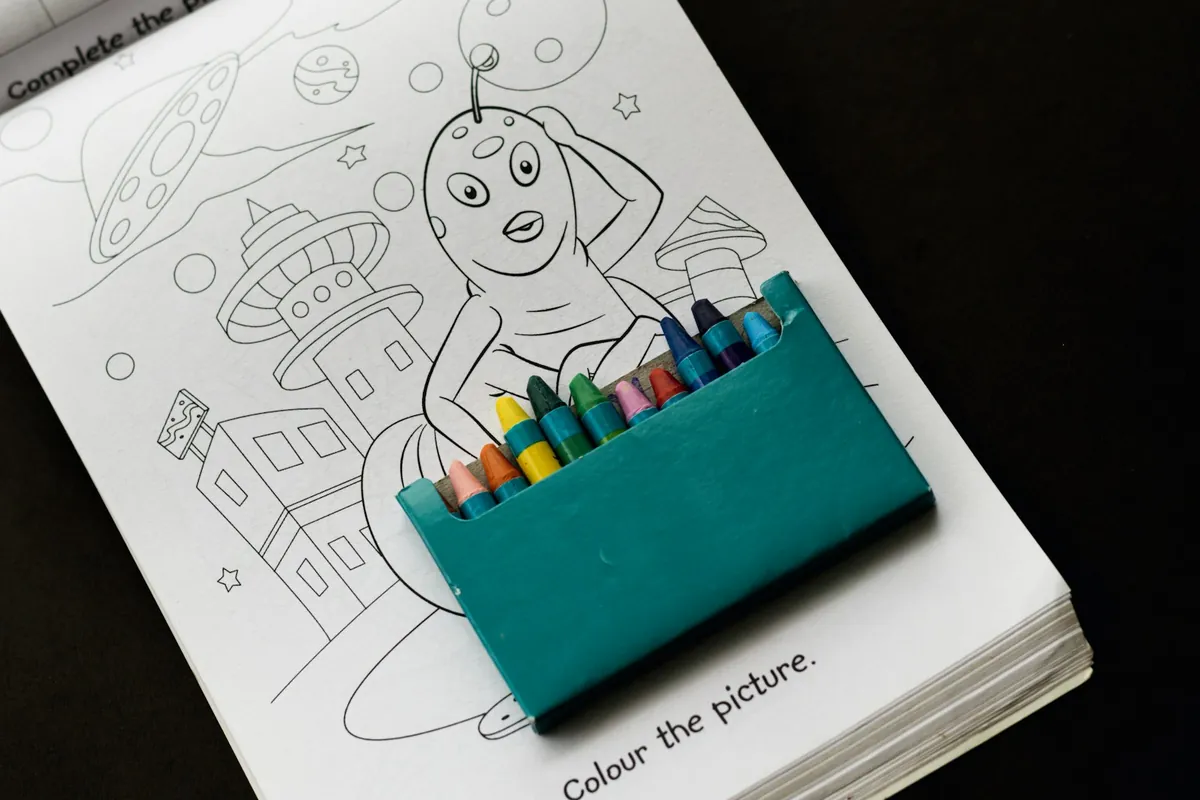
- Something to draw with. Paper and a few crayons cover more ground than anything else.
- Stickers. Absorbing, quiet, and they stick to the table rather than the floor.
- A small book, particularly a lift-the-flap one.
- Something from home they have not seen for a fortnight, which is effectively a new toy.
- A snack for the waiting, which solves the actual problem in many cases.
- A walk outside while you wait, if there are two adults.
Our list of what to pack when eating out covers this in more detail, and it is genuinely the difference between a meal that needs a screen and one that does not.
If you do use one, use it deliberately
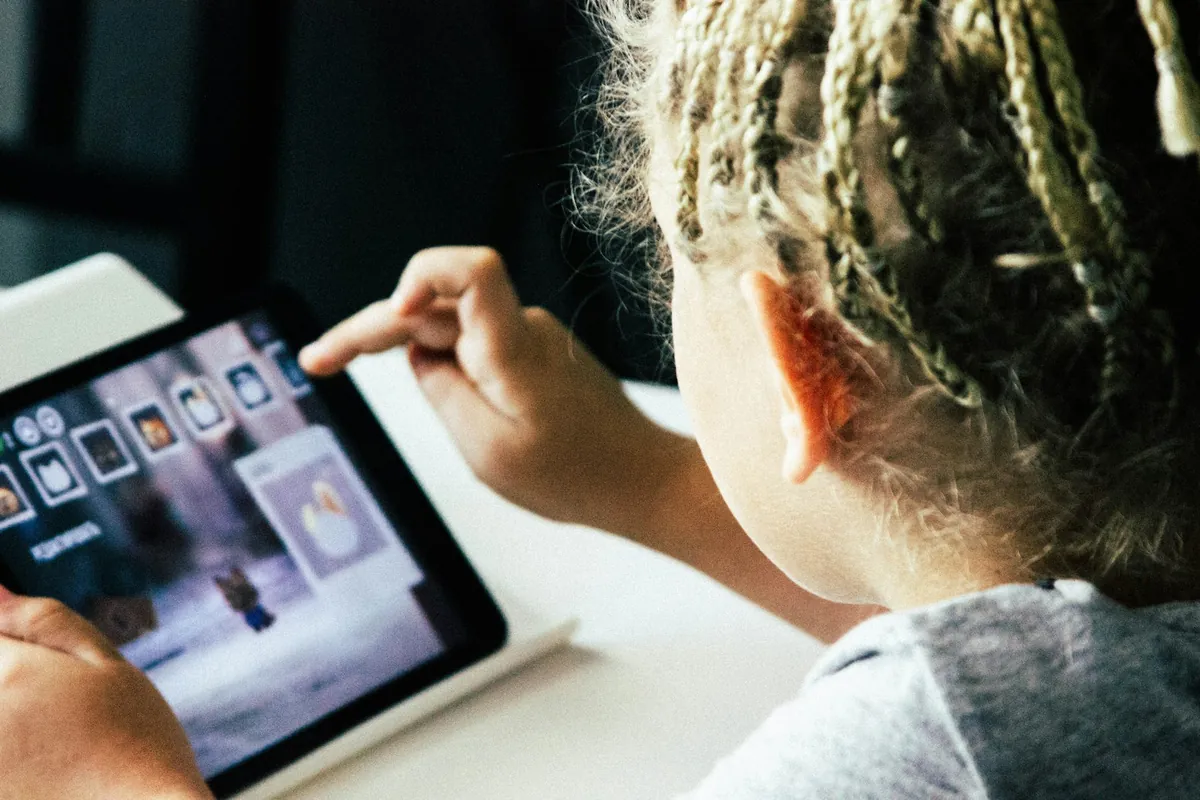
The version that causes regret is the screen produced in desperation, handed over without terms, and then fought over when you try to remove it. The version that does not is planned.
Say what it is for and when it ends before you hand it over: after we have ordered, until the food arrives. Keep the sound off or use headphones, which is a courtesy to the room rather than a concession. Put it away when the food comes, so eating still happens without one. And do not use it as the reward for the previous twenty minutes, because that teaches something you did not intend.
Handled that way it is a tool, and one used for a defined stretch rather than a state the whole meal happens inside.
Some outings are harder, and that is a real factor
It is worth saying plainly that the people most confident about this are frequently the ones with the easiest circumstances.
One adult with two children eating out is a different exercise from two adults with one. A long train journey is not a twenty-minute lunch. A child who finds noise and crowds very hard is not the same as one who does not. And a parent at the end of a bad week is allowed to take the easier option without it being a philosophical failure.
The useful question is not whether you ever do it, but whether it has quietly become the default in situations where something else would work.

The middle position most families land on
Somewhere between never and always, applied unevenly, and that is not a failure of principle. It is what a workable rule looks like.
Most families end up with something like: not at home meals, not as the first response, yes on long journeys, and occasionally in a restaurant when the alternative is leaving. Written down that looks inconsistent. In practice it holds, because it is specific about the situations rather than about the device.
Our guide to why toddlers will not sit still at meals is worth reading alongside this, because a good deal of the pressure to reach for a screen comes from expecting more sitting than is realistic in the first place.
Choosing places where it is not needed
The structural answer, which nobody wants to hear because it takes more planning, is to eat somewhere a child does not have to sit still for forty minutes.
Somewhere with space to move, where getting down from the table is unremarkable, removes the problem rather than managing it. That is much of what family cafes and play cafes are for. Our guide to eating out with toddlers covers choosing venues on that basis, and our visit page has our opening hours.
Frequently asked questions
Is it bad to give a toddler a screen at a restaurant?
Published guidance is mostly about the overall pattern rather than any individual twenty minutes. The frequency matters far more than the instance, and one meal is not the thing the recommendations are aimed at.
What can I bring instead of a screen?
Paper and crayons, stickers, a small lift-the-flap book, something from home they have not seen recently, and a snack for the waiting. The hard stretch is usually before the food arrives rather than during the meal.
How do I use a screen without it becoming a fight?
Say what it is for and when it ends before handing it over, keep the sound off or use headphones, and put it away when the food arrives. The version that causes trouble is the one produced in desperation with no terms attached.
What if other people judge me for it?
Some will, and their opinion has no consequences. The more useful question is whether it has quietly become your default in situations where something else would work.
How can I avoid needing one at all?
Choose places where a child does not have to sit still for forty minutes. Somewhere with room to move and where getting down from the table is unremarkable removes the problem rather than managing it.