You order, the food arrives, and within four minutes your child is under the table, out of the seat, or halfway across the room. Everyone else’s children appear to be sitting nicely. Yours has never once made it to the end of a meal.
This is one of the most common things parents of under-fives quietly worry about, and it is almost always a mismatch between what we expect and what a small child can actually do.
How long a toddler can genuinely sit
The rough guide used by early years staff is two to three minutes of focused attention per year of age. For a two-year-old that is four to six minutes. For a three-year-old, perhaps nine.
Eating stretches that a little, because food is motivating and the hands are busy. But not by much, and certainly not to the thirty or forty minutes a restaurant meal takes. A toddler who sits for ten minutes and then wants down is behaving exactly to specification.
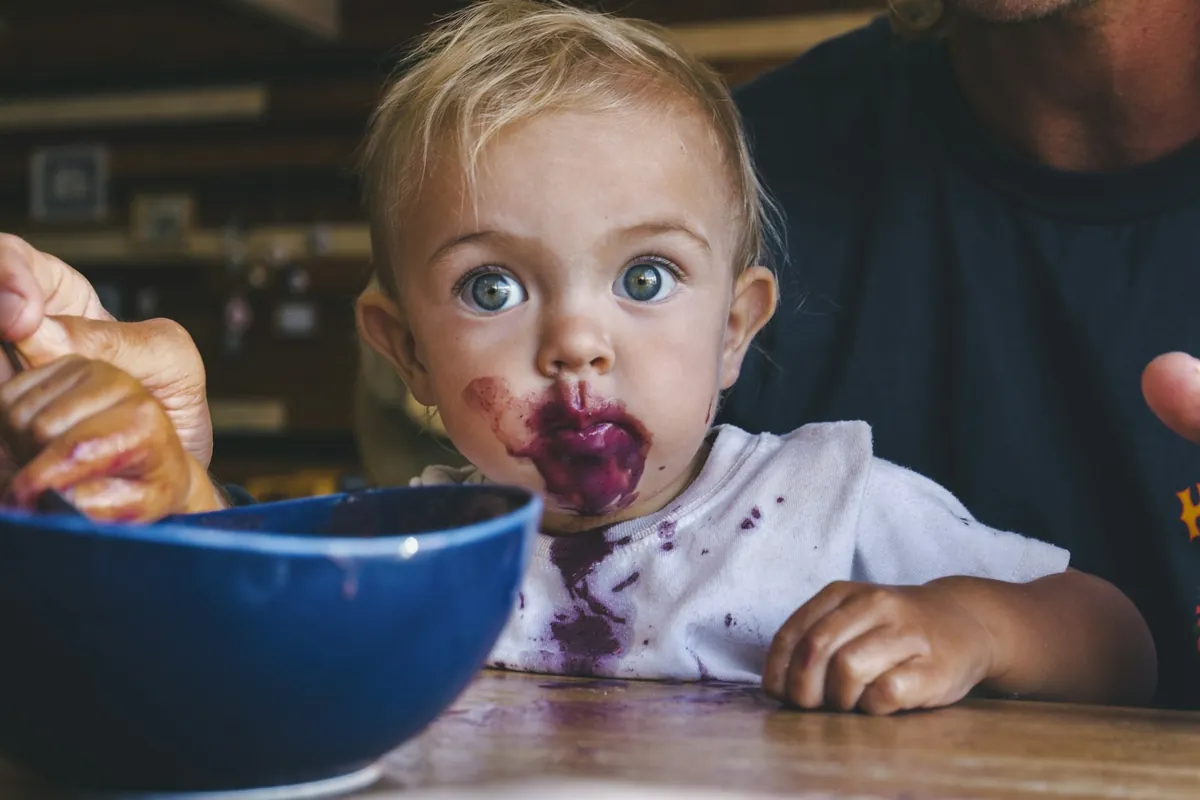
It is worth saying plainly: children this age are built to move. Wriggling is not defiance and it is not a discipline problem. It is a body doing what a body of that age does.
Why pressure makes it worse
The instinct is to increase the requirement. Sit down. Sit properly. Sit until everyone has finished. This tends to produce a meal that is a battle rather than a meal.
The more useful framing is the one set out in Ellyn Satter’s division of responsibility in feeding: the adult decides what is served, when and where, and the child decides whether and how much to eat. Getting down when finished sits on the child’s side of that line, and fighting it usually costs more than it gains.
What actually helps
Most of the useful adjustments are structural rather than behavioural.
Before the meal
- Let them run first. A child who has been still for an hour cannot then be still for another one.
- Feed them before they are desperate. Past a certain point, hunger stops helping and starts sabotaging.
- Use a seat with foot support. Dangling legs are genuinely uncomfortable, and a footrest or a box under the feet steadies the whole body.
- Sit them in, not at the end. A child on the outside of a table is a child already halfway to leaving.
- Set the expectation small. “Stay until you have finished” beats “stay until we all have”.
The footrest point is the one most people have never heard and the one that changes the most. A child perched with their legs hanging has no stable base, and staying upright takes constant effort that gets spent instead of listening.

Eating out is a different problem
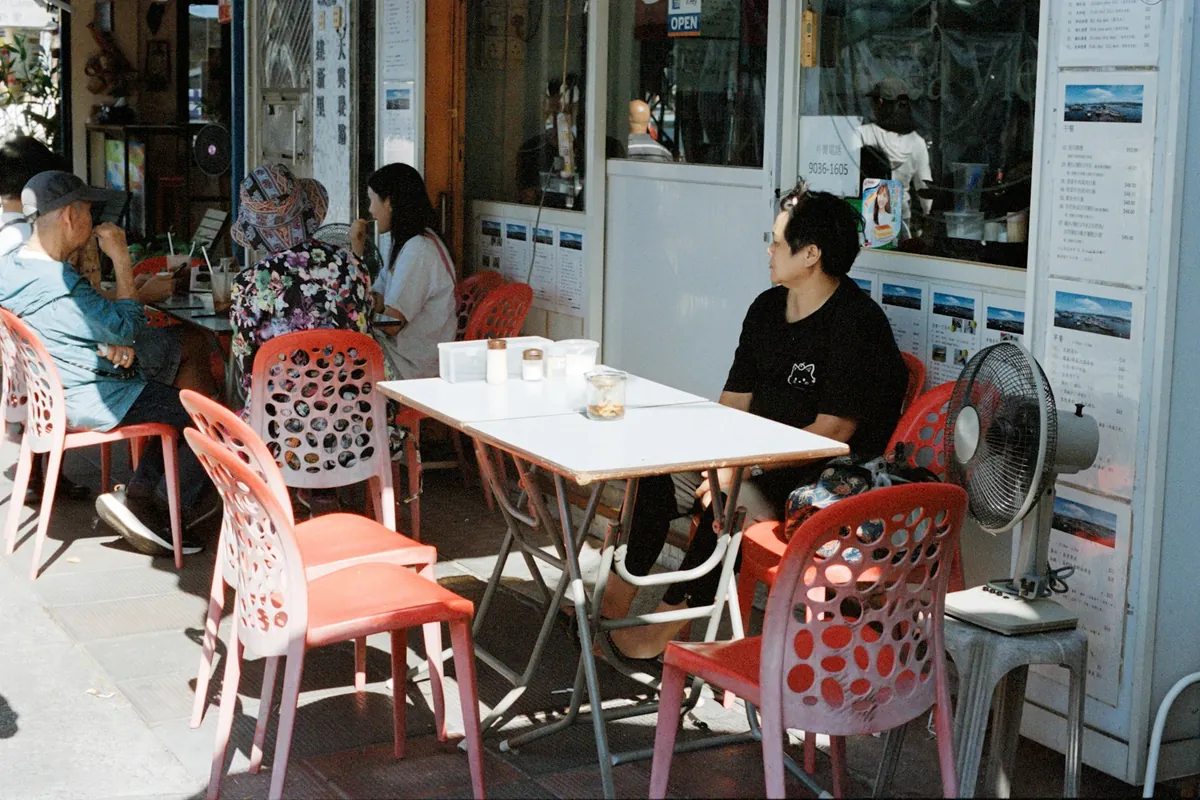
At home the meal is short and the seat is familiar. In a cafe there is a wait before the food, an unfamiliar chair, and a great deal to look at.
The wait is the real difficulty. Nobody can reasonably ask a two-year-old to sit doing nothing for twenty minutes, and most restaurant meltdowns happen before anything arrives rather than after.
| Stage of the meal | What tends to go wrong | What helps |
|---|---|---|
| Arriving | Straight into a chair after a car seat | A short walk around first |
| Waiting to order | Nothing to do, nothing to hold | Order fast, decide beforehand |
| Waiting for food | The longest and hardest stretch | A snack, and something to do with hands |
| Eating | Usually the easiest part | Serve their food first |
| After eating | Done, and everyone else is not | Let them get down, or leave |
Somewhere they can get down
The most reliable fix is not a technique at all. It is choosing places where getting down is allowed.
Somewhere with space to move, where a child leaving the table is unremarkable, removes the entire problem rather than managing it. That is a large part of why family cafes and play cafes exist — not because the food is different, but because the seating rule is.
Our guide to eating out with toddlers covers the wider logistics, and what to pack deals with the waiting-for-food stretch specifically.
The things that get blamed but rarely help
A few standard interventions come up constantly and mostly do not work at this age.
Rewards for staying seated. These work for a week and then stop, because they attach a price to something the child cannot reliably deliver. Sending them away from the table. The child wanted to leave, so this is not a consequence. Talking through it at the time. Explanations land later, when everyone is calm, not mid-meal. A screen. It genuinely keeps a child seated, and it also means nobody is eating or noticing they are full — useful as an emergency measure, expensive as a habit.
On the tablet question specifically, see our guide to screens on days out.
What to do about the food itself
Getting down and not eating often arrive together, and they are worth separating.
A child who leaves the table having eaten little has usually decided they are finished, and calling them back rarely changes that. What tends to help is not chasing the meal: no commentary on how much went in, no bargaining, no separate second dinner produced twenty minutes later.
Serve something you know they eat alongside whatever else is on the table, and let the rest be their business. Our guide to what to look for on a kids menu covers how to order in a way that makes this easier.

Age by age, roughly
Knowing what to expect at each stage makes the difference between an annoying meal and a meal you thought had gone badly.
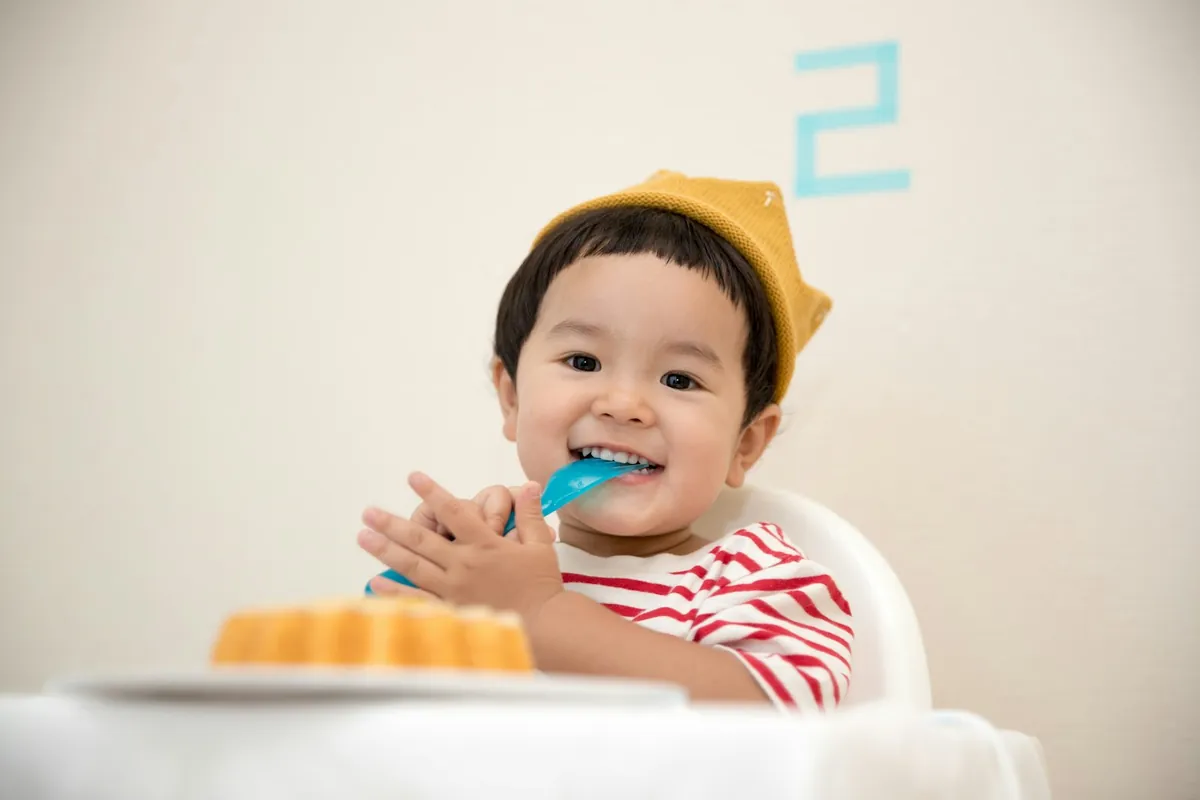
Around one, a child eats in short bursts and will want out of the high chair almost as soon as the food is gone. At two, expect five to ten minutes and a strong opinion about being strapped in. At three, ten to fifteen minutes is realistic, and conversation starts to hold them at the table a little longer. At four, a whole family meal becomes possible on a good day, and unremarkable by five.
Restaurants stretch every one of those numbers, because the waiting is added to the eating. Halving your expectation when you are out is not pessimism; it is arithmetic.
When it does change
Somewhere around four, and properly around five, sitting through a meal stops being an achievement and becomes ordinary. It arrives gradually and it arrives without being taught.
If you are in the middle of it now, the practical advice is to stop measuring your child against a table of adults. Six minutes at two, ten at three, and a whole meal at five is a completely normal trajectory, even though the middle of it is not much fun in a busy room.
If you want to know what we serve before you visit, our menu page lists it.
Frequently asked questions
How long should a toddler sit at the table?
Roughly two to three minutes per year of age, so four to six minutes at two and around nine at three. Food stretches that a little, but not to the length of a restaurant meal.
Should I make my toddler stay at the table until everyone finishes?
Usually not. Insisting turns the meal into a battle and rarely improves the eating. A smaller expectation — stay until you have finished — works better than a family-wide one.
Why does my child sit better at home than in a restaurant?
Because of the wait. At home the food is already there; in a cafe there is a long stretch with nothing to do, and that is when most difficulties happen rather than during the meal itself.
Does a footrest really make a difference?
It does. A child with dangling legs has no stable base and spends real effort staying upright. A seat with foot support, or a box under the feet, often adds several minutes on its own.
At what age do children sit through a whole meal?
Around four it starts to become possible and by about five it is ordinary. It develops on its own rather than being trained, which is why pressure earlier tends not to speed it up.