Most advice about eating out with toddlers is about managing the child. In practice, the venue you choose does more work than any technique you can apply at the table.
The short version: go early, choose somewhere noisy and casual, order your child’s food the moment you sit down, and pick a venue where a toddler is allowed to move. Sitting still for forty minutes is a skill most under-fours simply do not have yet.
Timing does most of the work
A toddler at 11:30am and the same toddler at 1:15pm are different people. Eat before the hunger becomes urgent and before the nap window opens.
- Aim for opening time or just after. Quieter rooms, faster service, more patient staff.
- Eat 30 minutes earlier than you normally would. The wait for food is where most meals go wrong.
- Avoid the tail end of the day. Late afternoon is when tiredness and hunger compound.
Choose the venue on three criteria
| What to look for | Why it matters |
|---|---|
| Somewhere to move | The single biggest factor. A play area, or at least space to walk, resets a restless child |
| Ambient noise | A busy room absorbs a shriek. Quiet fine dining amplifies it |
| Fast first food | Bread, fruit or a small starter within minutes buys you the rest of the meal |
| High chairs and a changing table | Signals the venue actually expects children |
| Table position | A corner or booth beats a thoroughfare. Away from hot-drink service routes |
This is the argument for family-oriented venues generally, and for play cafes specifically: they are set up on the assumption that a small child will need to get down and move halfway through the meal. Nobody is surprised when it happens.
Venues built around this idea have a name: read more about how play cafes work, or compare them with larger indoor playgrounds.
At the table
Order in one go, and order theirs first
Put your child’s food in as soon as you sit. If the kitchen can send something out early — fruit, toast, a few cucumber sticks — ask. The gap between sitting down and food arriving is where most toddler meals unravel.
Seat strategically
Put the toddler on the inside, away from the aisle. Move the cutlery, salt, and anything breakable out of reach before you sit down rather than after the first grab.
Keep the table small
Fewer items in front of a toddler means fewer things to throw. One cup, one plate, one fork. Take the rest away.
Have a low-key backup
A sticker book, a small notepad, or two toy cars in a bag. Bring it out when the food is ordered, not before — novelty is a finite resource.
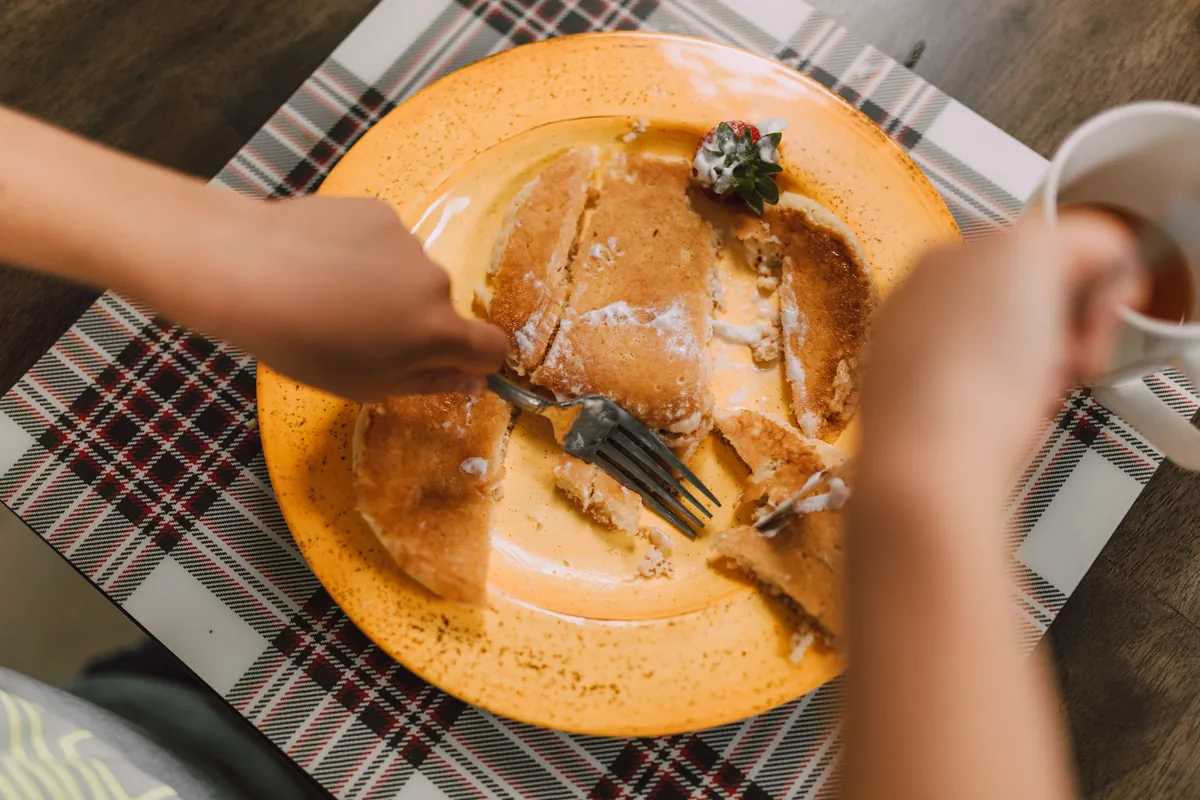
Where there is no children’s menu, our guide to ordering from an ordinary menu covers what to ask for.
What to order
Familiar beats adventurous when you are out. A meal in public is not the moment to introduce a new vegetable. Ordering something your child reliably eats, plus one thing from your own plate to try, is a reasonable balance.
Portion sizes on children’s menus are often generous; sharing an adult plate is frequently enough for an under-three. The USDA’s nutrition guidance for children is a sensible reference point for what a balanced day looks like, though one meal out is not worth agonising over.
If your child has a food allergy
Tell staff when you order rather than when the food arrives, and be specific. Many cafes can adapt a dish if they know in advance. Written details help in a busy service.
If you are choosing where to go, our checklist on what makes a cafe family friendly is worth a read first.
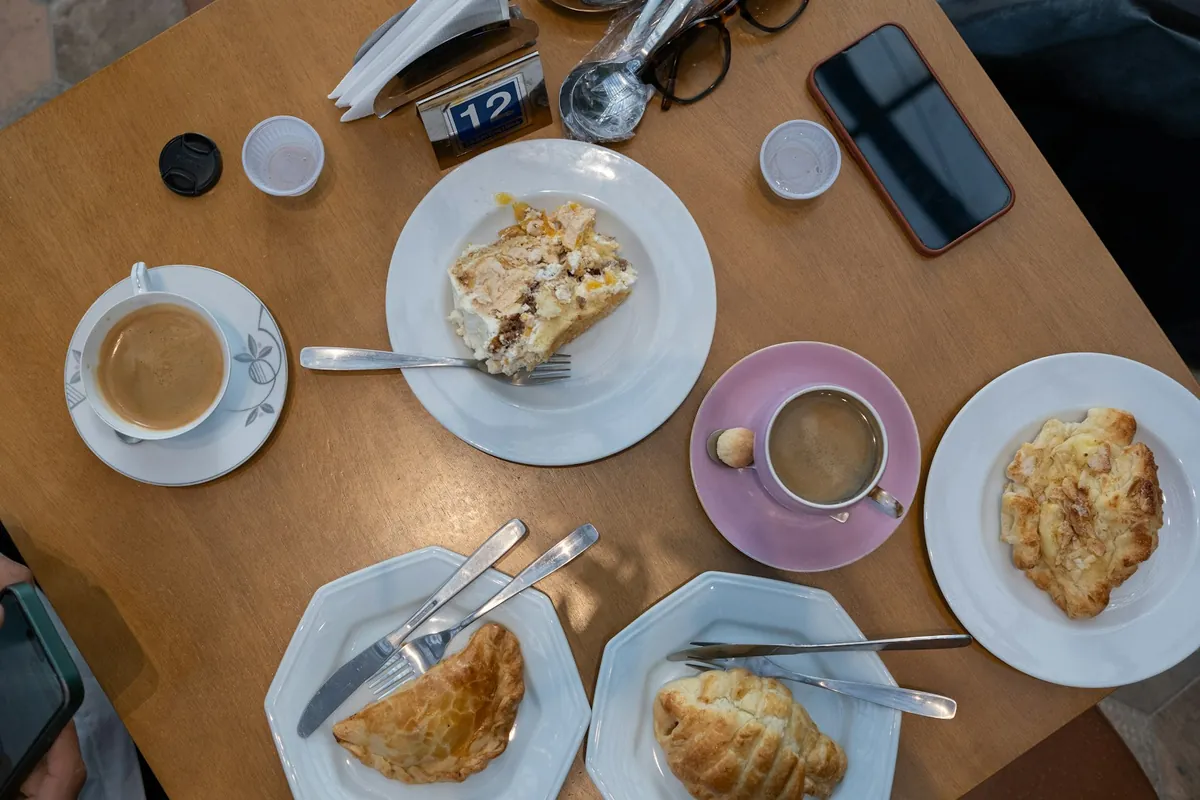
If staying in the seat is the specific problem, see our guide to why toddlers will not sit still at meals.
Setting realistic expectations
A successful meal out with a two-year-old is not a leisurely hour. It is:
- Everyone eats something
- Nobody cries for long
- You get to drink a hot drink while it is still hot
- You leave before it turns
That is a good outing. Expecting a relaxed adult lunch with a toddler at the table is the fastest route to disappointment.
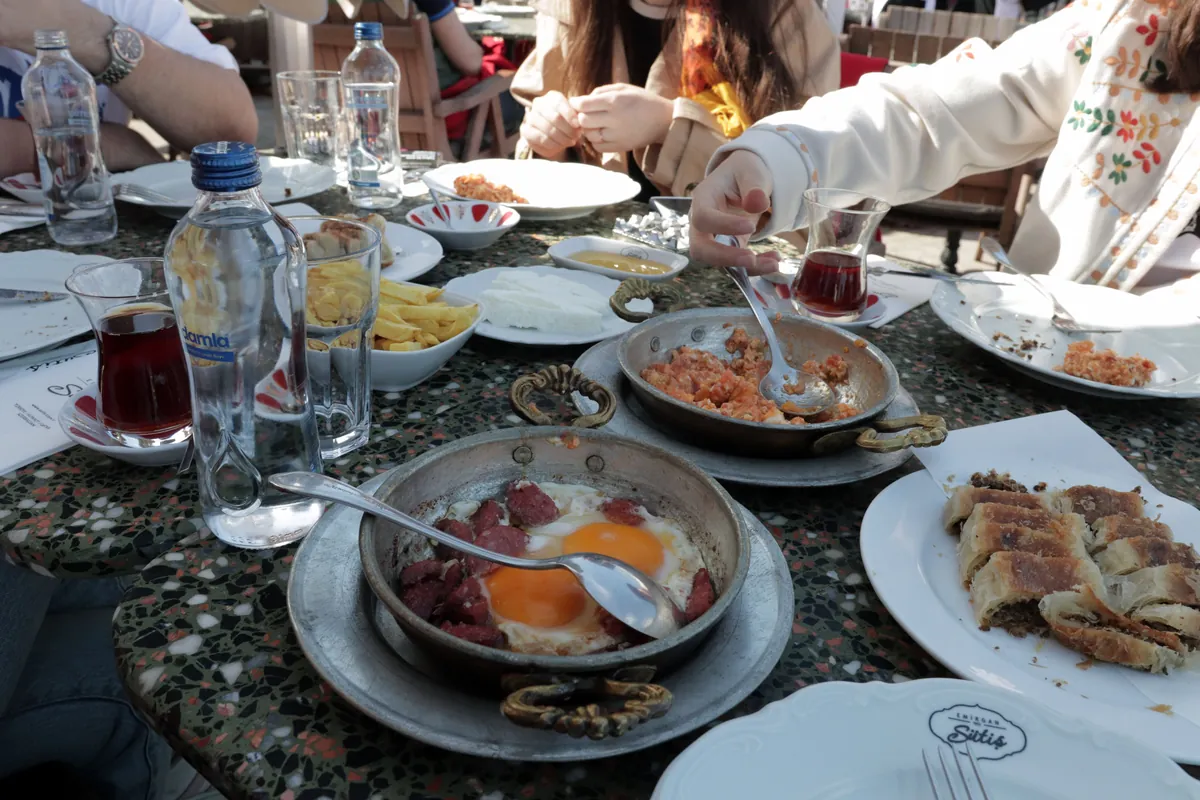
Two companion guides: what to pack and how to read a kids’ menu.
The leaving problem
Have the bill settled before you need to go. Trying to pay while a toddler is done with sitting is a specific kind of stress that is entirely avoidable. Many parents pay when the food arrives for exactly this reason.
Give a warning — “two more bites, then shoes” — rather than an abrupt end, and build in five minutes for the actual departure.
What to expect at each age
| Age | Realistic sitting time | What helps most |
|---|---|---|
| 6–12 months | 20–30 minutes | Timing around a feed and a nap; a high chair with a footrest |
| 1–2 years | 20–30 minutes | Food arriving fast, and somewhere safe to get down |
| 2–3 years | 30–40 minutes | A job to do — stickers, their own napkin, choosing a drink |
| 3–5 years | 40–50 minutes | Being talked to like part of the meal rather than managed |
| 5+ | A full meal | Ordering for themselves and a conversation to join |
These are ranges, not standards. A child who has slept badly loses twenty minutes off whatever their usual limit is, and no technique recovers it.
With an older sibling at the table too, see our guide to eating out with a toddler and an older child.
The mid-meal reset
When a toddler starts to unravel halfway through, the instinct is to try to keep them in the seat. Getting them out for two minutes almost always works better. A short walk to look at something, a trip to wash hands, or a few minutes in a play area resets the situation and buys you the rest of the meal.
This is the practical reason parents gravitate towards venues with a play space attached: the reset is built into the room rather than requiring a trip outside into the rain.
Managing the other diners
Most people are considerably more relaxed about children in cafes than parents fear. The manageable part is your own preparation — going early, choosing a table away from the quietest corner, and clearing up the worst of the mess before you leave. A brief apology to your server and leaving the table decent covers the rest.
If your child does have a full meltdown, taking them outside for two minutes is both the kindest option for them and the one everyone else appreciates. It is rarely as big a moment as it feels.
Frequently asked questions
What is the best time to eat out with a toddler?
Early. Aim for opening time or the very start of the lunch service, before the room fills and before your child is properly hungry.
How do I keep a toddler at the table?
Largely, you do not — not for a full meal. Choose a venue where getting down and moving is acceptable, and plan the meal in shorter stretches instead.
Should I bring food from home?
A backup snack for the journey is sensible. Bringing a full meal into a cafe usually is not, and many venues do not permit outside food. Ask if you have a specific dietary need.
Are screens at the table a bad idea?
It is a personal call. A screen-free option such as stickers or a small notepad keeps the meal more sociable, but a tired parent making it through lunch is a legitimate goal too.
To sum up
Eat early, pick somewhere that expects children, order immediately, and choose a venue where a toddler can get down and move without it being a problem. The technique matters far less than the room you are in.
Breakfast and lunch with the kids
Two Sisters Play Cafe serves breakfast and lunch in Milwaukie, with a playroom next to the tables so children can eat, move, and come back.