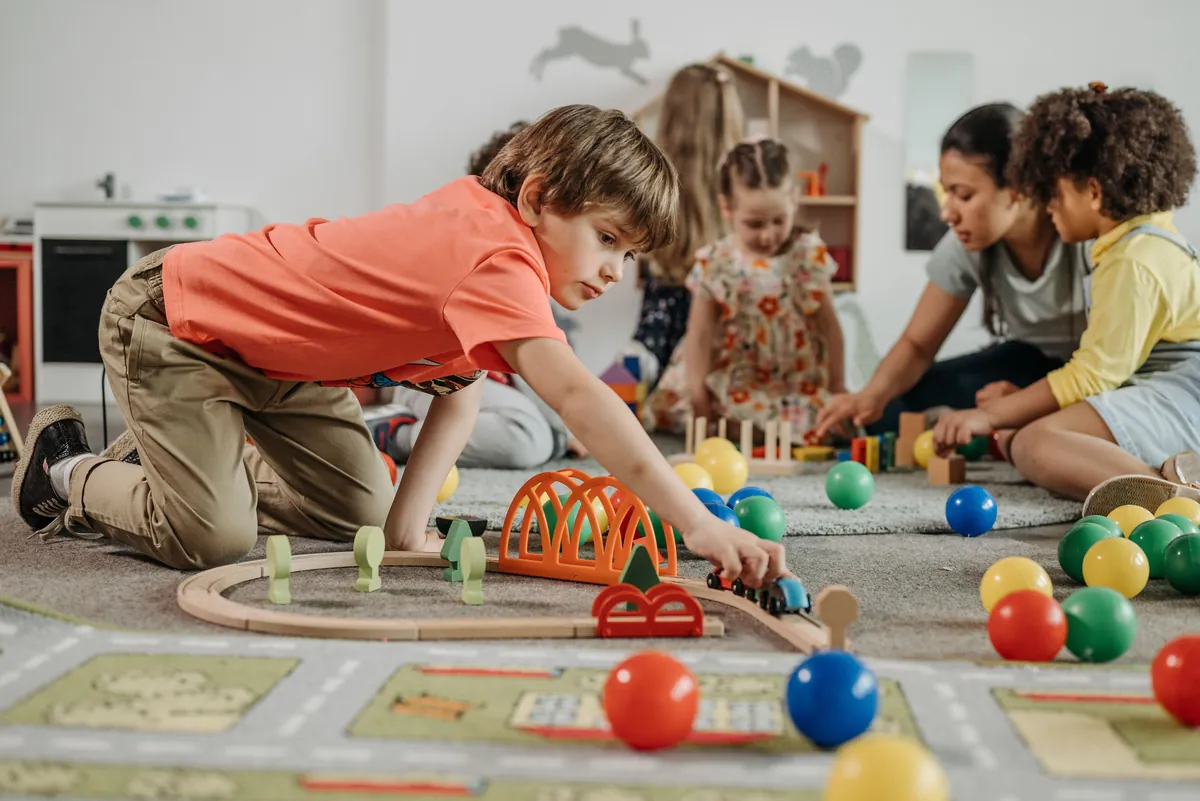
A play cafe is a cafe with a dedicated indoor play space attached, designed so young children can play while the adults with them sit down, eat properly and have a conversation. It is one room for climbing and one room for coffee, close enough that nobody has to choose between the two.

In short: a play cafe is a family-friendly cafe with a supervised, enclosed play area for young children. Parents order food and drink as they would anywhere else, pay a small admission for the play space, and stay within sight of their kids the whole time. Most are built for the under-eights, with a focus on toddlers and preschoolers.
How a play cafe actually works
The format is simple once you have done it once. You arrive, pay play admission at the counter, and your child heads into the play area while you find a table. You order food and drinks the same way you would at any cafe. Play areas are usually enclosed with a single entry point, so children stay contained and you can see them from where you are sitting.
Crucially, a play cafe is not childcare. Children remain the responsibility of the adult who brought them, and most venues ask that a parent or carer stays on site for the whole visit. Staff keep the space clean and safe; they do not supervise individual children.
What you will usually find
Play cafes vary, but most share a recognisable set of features. The table below covers what is typical rather than what any one venue guarantees.
| Area | What it usually includes | Who it suits |
|---|---|---|
| Play structure | A soft or modular climbing frame, often with a slide | Confident walkers to about age 7 |
| Floor play | Ball pit, ride-on toys, blocks, pretend-play sets | Crawlers and toddlers |
| Craft or art corner | Paper, colouring, sometimes structured projects | Preschool and early school age |
| Games and books | Board games, puzzles, a reading nook | Older siblings |
| Cafe seating | Tables with sightlines into the play area | The adults |
| Practicalities | Changing table, high chairs, somewhere for bags and shoes | Everyone |
Why parents use them
The honest answer is that a play cafe solves a specific, familiar problem: young children cannot sit still for an hour, and adults would quite like to finish a hot drink. A conventional cafe forces a trade-off. A play cafe removes it.
There is a second, less obvious benefit. Because children can move, visits tend to last longer and feel calmer than a rushed restaurant meal. Parents get a genuine break rather than a countdown. For families with a baby and a toddler, it is often the only outing where both children are happy at the same time.
It is also indoor. In the Pacific Northwest that matters for a good half of the year, and a play cafe gives you somewhere to go that does not depend on the forecast.
Movement matters, and indoor space helps
Young children need a lot of active play. The Centers for Disease Control and Prevention notes that preschool-aged children should be physically active throughout the day, and that school-aged children need at least 60 minutes of activity daily. An indoor play space is a practical way to hit some of that on a wet Tuesday, though it is one option among many rather than a substitute for outdoor play.
Play cafe, soft play, or drop-in class?
Parents often use these terms interchangeably, and venues themselves are not always consistent. Broadly:
- Play cafe — play space plus a working kitchen and coffee. Designed for adults to stay and eat.
- Soft play or indoor playground — larger play equipment, often with only vending machines or a snack counter. Built around the play, not the meal.
- Drop-in play class — a scheduled, led session with a start and end time, usually with music or structured activity.
If you want to sit down with a plate of food while your child plays, the play cafe is the format you are looking for. We have written a fuller comparison of play cafes and indoor playgrounds if you are deciding between the two.

For the wider picture — how play cafes compare with other indoor options and how to fit them into a week — see our guide to indoor play for toddlers and preschoolers.
What a first visit looks like
- Check opening hours before you go. Many play cafes run daytime hours only and close mid-afternoon.
- Arrive, pay play admission, and order food when you are ready.
- Settle your child in the play area and take a table with a clear view.
- Expect to get up several times. That is normal, and nobody minds.
- Plan for about ninety minutes to two hours. Most young children start to flag after that.
Worth bringing
- Grippy socks, since many play areas are shoes-off
- A change of clothes for under-threes
- Water bottle and a familiar snack as backup
- Wipes and nappies if you are still in that phase
- A carrier or pram that folds small, if space is tight
Our full packing guide for indoor play visits goes into more detail, including what not to bother with.

If you are bringing a toddler to a cafe for the first time, our tips on eating out with toddlers may help too.
If you have a baby rather than a toddler, we have a separate guide on when babies can start going to a play cafe.
Much of what happens in a session is sensory play, which we cover in our guide to the benefits of messy play.
Ours was built by two sisters who wanted exactly this — the story is on our about page.
Who play cafes suit best
The sweet spot is roughly six months to seven years. Babies who are sitting up get floor play and a change of scene. Toddlers get somewhere safe to run. Preschoolers get climbing and craft. Older children can enjoy them, particularly as the sibling of a younger child, but a dedicated play cafe will feel small to most eight-year-olds.
They also work well for a specific set of occasions: a rainy-day outing, a first playdate with another family, a grandparent visit, or a small birthday. Many venues host parties outside normal opening hours, which is worth asking about if you are planning one.
Frequently asked questions
Do I have to stay with my child?
Yes. Play cafes are not drop-off childcare. A parent or carer is expected to stay on site and remain responsible for their own children throughout the visit.
What age is a play cafe for?
Most are designed for babies through to around age seven, with equipment aimed squarely at toddlers and preschoolers. Check individual venues, as some set their own age limits for the climbing structure.
Do I need to book?
Open play is usually drop-in during normal hours. Private hire and birthday parties are booked in advance. If you are visiting with a large group, it is worth calling ahead.
Can I bring my own food?
Generally no — play cafes are working cafes and the food service is part of how they operate. Most will accommodate allergy needs or baby food; ask when you arrive.
How long do families usually stay?
Ninety minutes to two hours is typical. That is long enough for a meal and a proper play, and short enough to leave before anyone gets overtired.
The short version
A play cafe is a cafe that has been designed around the reality of having small children with you. The play area keeps them busy and contained; the kitchen means you get a real meal rather than a hurried pastry. It is a straightforward format, and once you have used one it tends to become a regular fixture rather than a one-off outing.
Come and see ours
Two Sisters Play Cafe is a family-run cafe and indoor playroom in Milwaukie, Oregon. Have a look at what is in the playroom, or check current hours before you head over.