
A meal out with one small child is a logistical exercise. A meal out with a toddler and a six-year-old is two different meals happening at the same table, on different timescales, with one adult trying to run both.
It is entirely doable, and most of what makes it work is decided before anyone orders.
The two problems are not the same problem
The toddler’s difficulty is the waiting, and it happens at the start. The older child’s difficulty is the boredom, and it happens at the end — after they have eaten, while the adults are still going.
Sequencing around that is most of the job. Almost every strategy below is really about staggering the two so they are not both difficult at once.

Seating, which decides more than it should
The arrangement matters more with two children than with one.
What works
- An adult beside the toddler, not opposite. Reaching across a table all meal is exhausting.
- The older child on the inside, where they are less able to wander and less in the way.
- A booth if there is one, which contains both without effort.
- The toddler away from the walkway, for everyone’s sake.
- Hot drinks on the far side, permanently.
- Not opposite each other, if they are at the poking stage.
Our guide to high chairs and where to sit covers the seating question in more depth; with two children the principles are the same and the stakes are higher.
Order in the right sequence
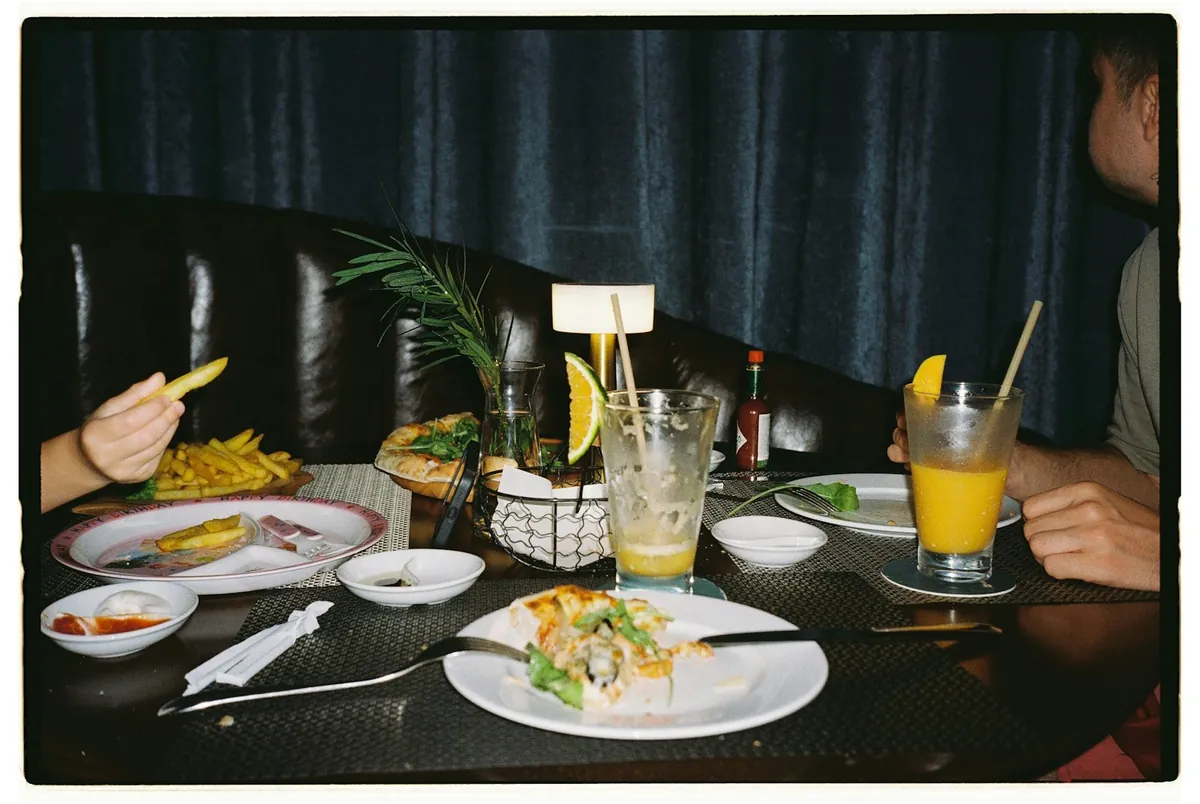
Order everything at once and ask for it staggered. Toddler food first, older child’s food next, adults last.
That sounds like a lot to ask and it is one sentence at the point of ordering. What it buys is enormous: the toddler eats during the stretch they cannot wait through, and by the time the adults’ food arrives one child is done and the other is halfway.
The mistake is ordering everything to arrive together, which produces the exact situation everybody dreads — four plates on the table, a toddler who has waited too long, and nobody eating anything hot.

Give the older one a job
A six-year-old at a table with a toddler is either an enormous help or a second problem, and which one is largely down to whether they have been given something to do.
Real jobs work better than made-up ones: reading the menu out, choosing the toddler’s drink, carrying the cutlery, being in charge of the crayons. Children of that age genuinely like being useful, and it is far better than the alternative role, which is being told to stop winding up their sibling.
What does not work is making them responsible for the toddler’s behaviour. Helping is reasonable; supervising is not their job and it builds resentment quickly.
The stretch after the toddler finishes
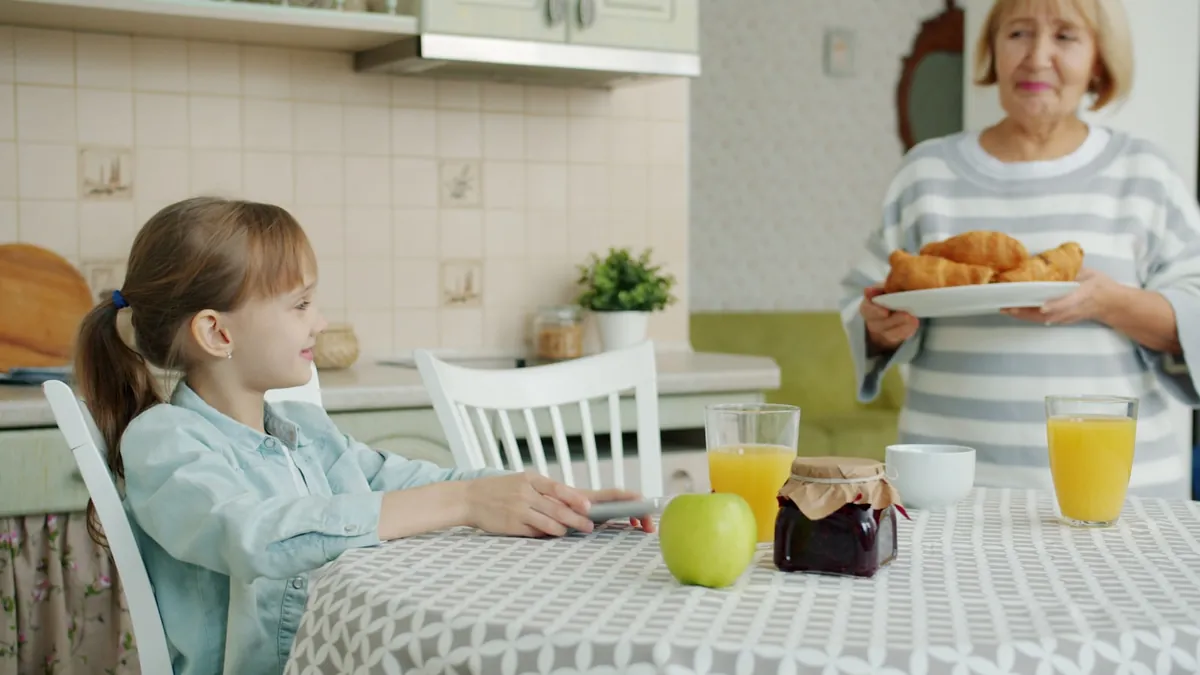
This is the hard part and it arrives on schedule. The toddler is done and wants down; the older child is mid-meal; the adults have barely started.
The options, in rough order of usefulness: one adult takes the toddler outside for five minutes while the other stays; the toddler moves onto a lap and a snack; or somebody accepts that the meal is ending now and asks for the bill. Trying to hold a finished toddler in a chair for another fifteen minutes is the option that produces the scene.
If there is only one adult, plan for this specifically. That usually means eating somewhere with space to move, or ordering your own food to arrive with the toddler’s and eating it fast. Illinois Extension’s family resources make the broader point that shared meals are worth protecting, and the practical version of that with two ages is to make the meal shorter rather than to fight for a long one.
Ordering for two different appetites
The older child usually needs more than a children’s portion and less than an adult one, which is the gap most menus ignore.
A starter as a main, a side added to a children’s dish, or an adult plate split with the toddler all work better than ordering two children’s meals and watching one go untouched. And where there is no children’s menu at all, our guide to what we serve is worth a look, or you can build something from sides — a technique that suits both ages at once.
One practical note: order the same drink for both if you can. Different drinks at that age gap produce a comparison, and comparisons at a restaurant table are a fight nobody needs.
Timing it around the younger one
With a gap of a few years, the two children have almost opposite ideal timings, and the younger one wins that argument every time.
The toddler’s good window is the constraint: mid-morning, or after a nap and before the late-afternoon slide. The six-year-old is fine at almost any hour, which means the plan is built around the toddler and the older child is asked to be flexible. That is not favouritism, and it is worth saying out loud to the older child rather than letting it look like one.
Weekends make this harder because the venues are busier at exactly the times that suit a toddler. If you have the option, a weekday late afternoon or an early Saturday is considerably easier than the middle of a Sunday.
Lower the ambition, not the frequency
The honest advice is to go more often and stay for less time. Two children at different stages will not sit through a leisurely lunch for another year or two, and the family that keeps trying tends to conclude that eating out does not work for them.
A forty-minute meal that goes well is worth far more than a ninety-minute one that falls apart at minute fifty, and it keeps the habit alive until the ages converge. Our guide to eating out with toddlers covers the single-child version, and days out with a baby and a toddler covers the younger pairing.
Frequently asked questions
How do I manage a meal out with children of very different ages?
Stagger it. The toddler’s difficulty is the waiting at the start and the older child’s is the boredom at the end, so sequence the meal so the two are not difficult at the same time.
What is the best way to order?
Everything at once, asked to arrive staggered: toddler first, older child next, adults last. It is one sentence at the point of ordering and it changes the whole meal.
Where should everyone sit?
An adult beside the toddler rather than opposite, the older child on the inside, away from the walkway, and ideally not opposite each other if they are at the poking stage.
What do I do when the toddler finishes first?
Take them out for five minutes if there are two adults, move them onto a lap with a snack, or ask for the bill. Holding a finished toddler in a chair for another fifteen minutes is what produces the scene.
Should the older child help with the toddler?
Give them a real job — reading the menu, choosing a drink, being in charge of the crayons. Making them responsible for their sibling’s behaviour is different, and it builds resentment quickly.