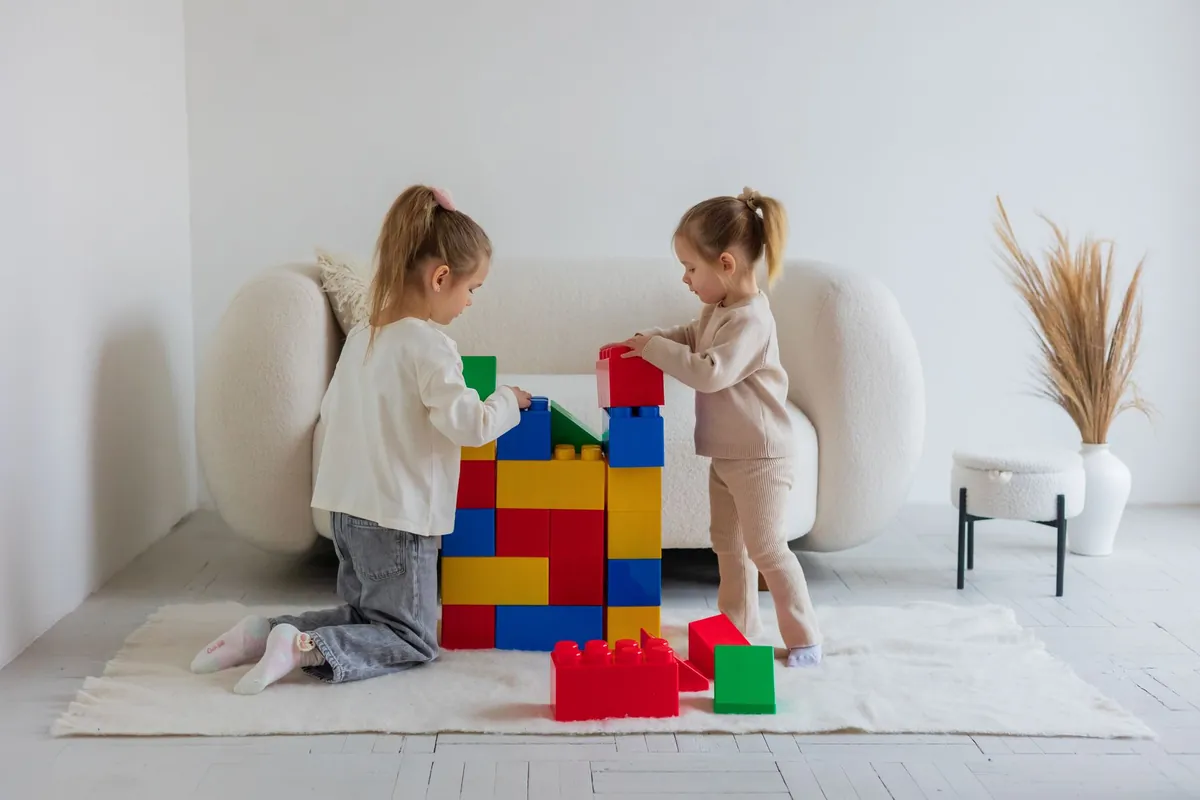
Your child takes a toy straight out of another child’s hands. The other child howls. The other parent looks over. You are now managing two things at once: a toddler who has done something completely normal, and a room that appears to be waiting for you to do something about it.
Almost every parent of a one- to three-year-old has stood in that exact spot. It helps to know what is actually happening developmentally, because it changes what is worth saying.
Sharing is not the skill you think it is
Sharing, in the adult sense, requires holding two things in mind at once: what you want, and what somebody else wants. That capacity is still under construction for most of the toddler years.
What a toddler has instead is a very direct relationship with objects. If I can see it and I want it, it is mine, and if it is in my hand it is definitely mine. This is not selfishness in any meaningful sense. It is the ordinary starting point that social skills get built on top of, through exactly the kind of back-and-forth interactions Harvard’s Center on the Developing Child calls serve and return.
Turn-taking works where sharing does not
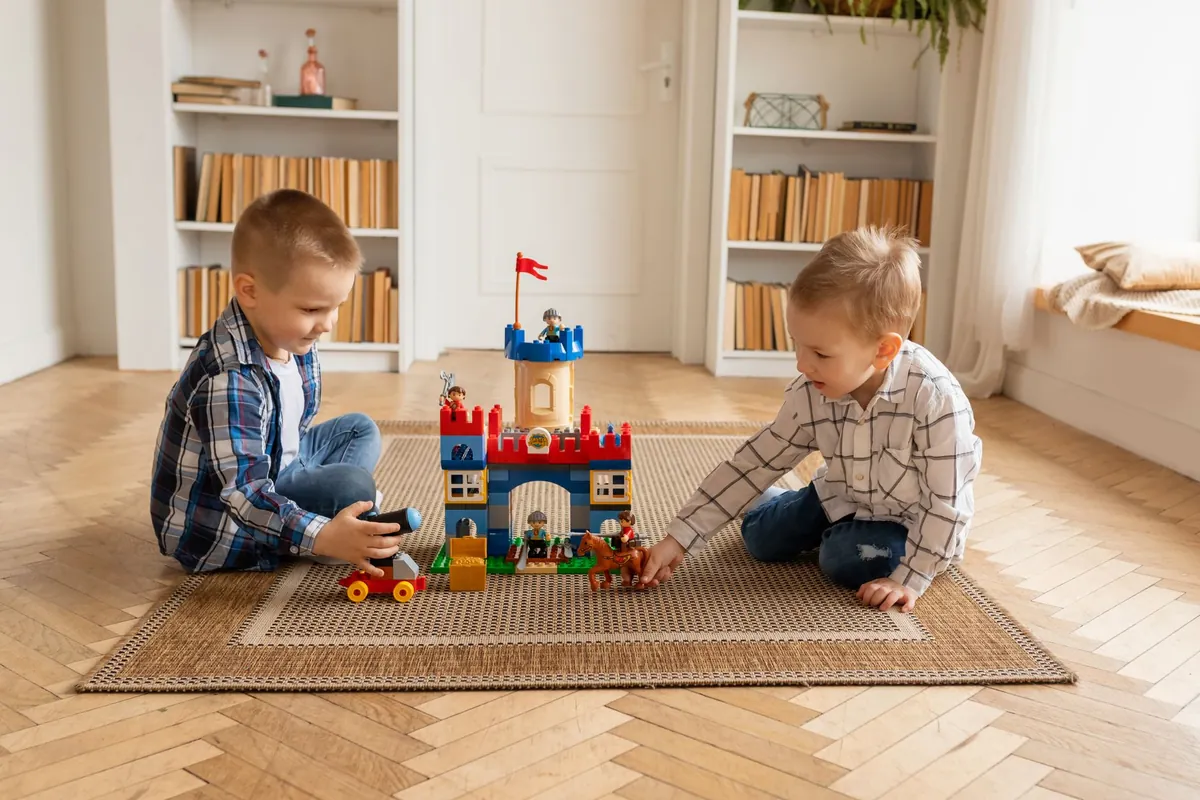
The useful shift is to stop asking for sharing and start running turns. Sharing is abstract and open-ended; a turn has a beginning, an end and a visible marker. Toddlers can follow that long before they can follow the concept behind it.
In practice that means “Amelia has it now, and when she is finished it is your turn” rather than “share nicely”. Then — and this is the part that gets skipped — you have to actually deliver the turn. A promised turn that never arrives teaches a child that waiting does not work, and next time they will simply grab.
What to do in the moment
The instinct is to remove the toy, apologise loudly and deliver a short lecture. Very little of that lands with a two-year-old, and most of it is aimed at the watching adults.
A sequence that works
- Go to the child who lost the toy first. Comfort travels further than correction, and it also settles the room.
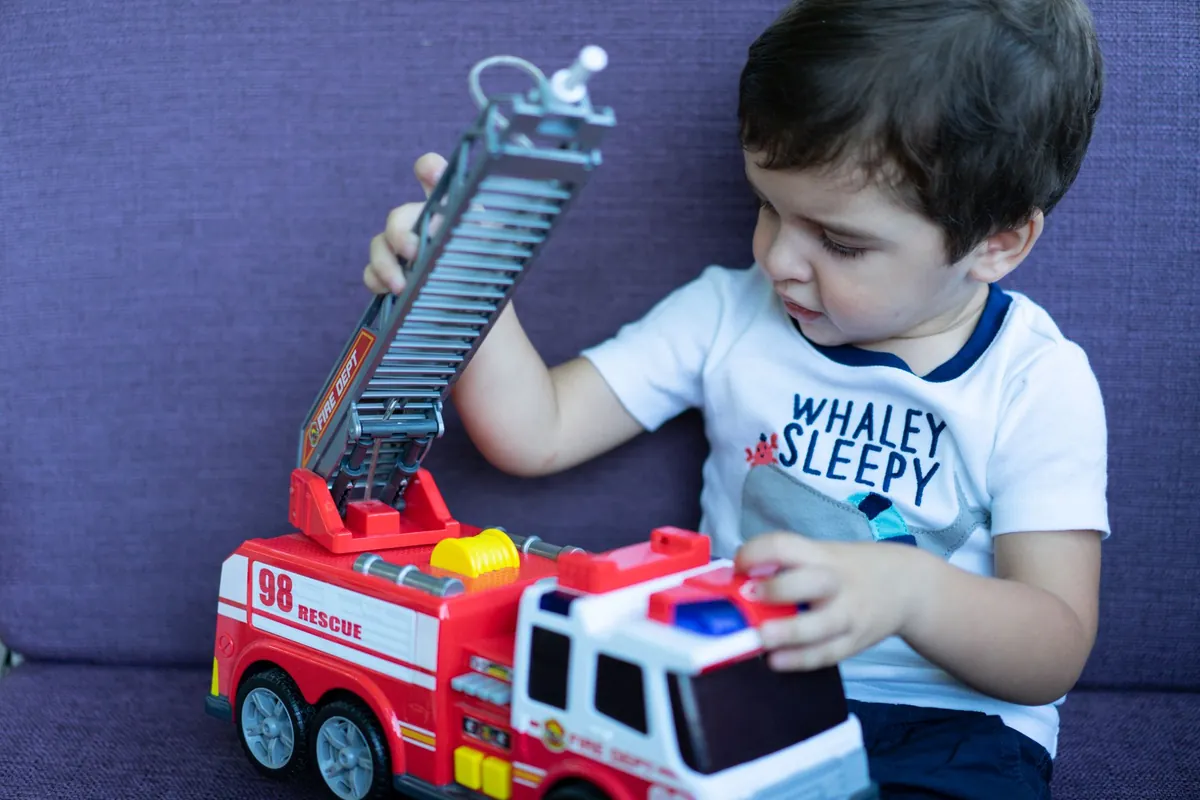
- Name what happened plainly. “You wanted the truck, so you took it. He was still using it.”
- Give the want its due. Wanting it was never the problem. Taking it was.
- Hand it back, calmly, and say when the turn is coming.
- Offer something to do while waiting. Waiting with empty hands is much harder than waiting with full ones.
- Then stop talking. The lesson is in the pattern, repeated, not in the explanation.
When it turns into hitting
Hitting, pushing and the occasional bite usually appear for the same reason: a strong feeling arrived faster than any words to describe it. It is most common between about eighteen months and three years, and it peaks precisely when a child’s understanding has raced ahead of their speech.
The response needs to be immediate, short and physical rather than verbal. Move between the two children, say “I will not let you hit” once, and shift your child somewhere quieter. Long explanations delivered to a dysregulated toddler go nowhere, and the sentence you actually want them to absorb is short enough to remember.
Come back to it later, when everyone is calm, with something they can use instead: coming to find you, saying “mine”, or stamping their feet. A child who has no alternative will keep using the one that works.
Why it happens more in some weeks than others
Parents often read a bad fortnight as a personality change. Far more often it is circumstantial, and the pattern is worth knowing because it tells you when to expect it.
Snatching spikes when a child is tired, when they are ill or teething, when something at home has changed — a new sibling, a house move, a new nursery — and during the stretch when their understanding has outrun their speech. It also spikes when they are genuinely interested in other children, which is a developmental step forward rather than back.
None of that makes the behaviour acceptable, and you still respond the same way. But it does mean a difficult run is usually a phase with a cause rather than evidence that nothing you are doing works.
The other parents
Much of the stress in these moments is not about your child at all. It is about being watched.
Two things worth knowing. First, most of the parents in the room have had the same week you have, and are far more sympathetic than the silence suggests. Second, what they are actually watching for is whether you noticed — not whether you produced a perfect intervention. A parent who moves in calmly reads well. A parent performing a loud telling-off for the benefit of the room reads worse, and does nothing for the child.
If your child is the one who got snatched from, a light touch helps everyone. “He is fine, they are both two” gives the other parent somewhere to put their embarrassment.
Choosing the setting deliberately
Some environments make this harder than others, and you can stack the odds.
| Setting | Effect on snatching |
|---|---|
| Many duplicates of the same toy | Much easier — there is another one |
| One highly desirable item | Predictably difficult |
| Busy, loud, crowded room | Shorter fuses all round |
| Quiet session, few children | More space to practise turns |
| Tired or hungry child | Every conflict escalates faster |
| Home, with their own toys | Hardest of all — ownership is obvious |
Playdates at home are genuinely the hardest version of this, which is worth knowing before you conclude your child is worse at it than everyone else’s. Our guide to planning a toddler playdate covers how to set one up so there is less to fight over.
What actually helps over time
Repetition, mostly. Not a conversation that finally lands, but the same short sequence handled the same way, several hundred times, while their brain catches up with their intentions.
Somewhere between three and four, most children start offering turns unprompted, and it can feel sudden. It is not — it is the accumulation of every calm handover you did back when none of it appeared to be working.
Our play cafe etiquette guide covers the wider question of sharing a space with other families, and our guide to indoor play looks at what to expect from a session. If a quieter time would suit your child better, our visit page has our opening hours.
Frequently asked questions
At what age do toddlers learn to share?
Genuine sharing usually begins somewhere between three and four, and even then it is inconsistent. Before that, turn-taking is the achievable version, because a turn has a clear beginning and end that a toddler can follow.
Should I make my toddler give a toy back?
Yes, calmly and without a lecture. Hand it back, name what happened in one sentence, say when their turn is coming, and then actually deliver that turn. The follow-through matters more than the telling-off.
Why does my toddler hit other children?
Usually because a big feeling arrived before the words for it did. It is most common between eighteen months and three years. Respond immediately and briefly, then teach an alternative later when everyone is calm.
Is forced sharing bad for toddlers?
Insisting on immediate handovers tends to backfire, because it teaches that whoever complains loudest gets the toy. Letting a turn finish naturally, then passing it on, works better and is easier for a toddler to understand.
Why is sharing harder at home than at a play space?
Because ownership is obvious at home. In a neutral space nothing belongs to anybody, which removes most of the argument before it starts.